Dish guides
Thai dishes explained
Thai menus are often grouped by type of dish (curries, stir-fries, salads, soups, noodles and rice) and are meant for sharing. Spelling in Latin letters varies a lot, so pad kra pao, phat kaphrao and pad gaprao are the same dish. These guides give each name in Thai script with a readable romanization, explain the dish and show how to ask for it less spicy or without an ingredient.
All guides
-
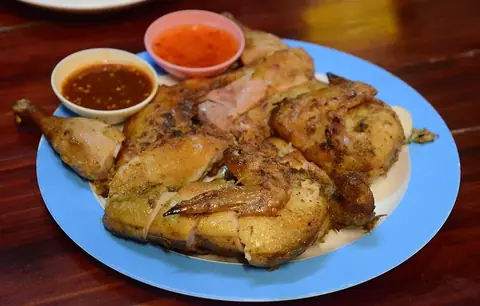 Gai yangไก่ย่างThai and Lao charcoal-grilled chicken in a garlic, coriander root and pepper marinade.
-
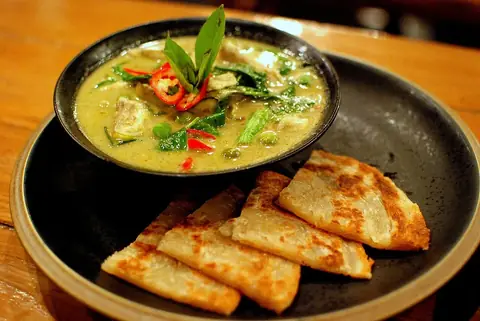 Green curryแกงเขียวหวานCoconut-milk curry with fresh green chilli paste, Thai aubergine and sweet basil.
-
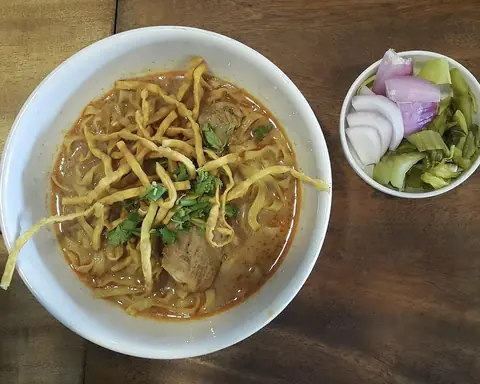 Khao soiข้าวซอยNorthern Thai curry noodle soup of egg noodles in coconut broth, topped with crispy noodles.
-
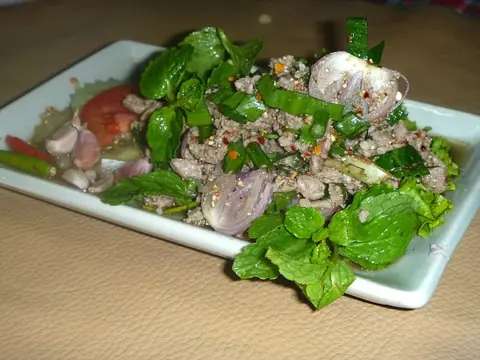 LarbลาบMinced meat salad with lime, fish sauce, chilli, toasted rice powder and fresh mint.
-
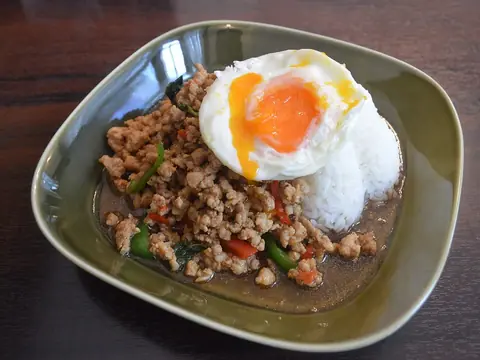 Pad kra paoผัดกะเพราThai stir-fry of minced meat with holy basil, garlic and chilli, served on rice with a fried egg.
-
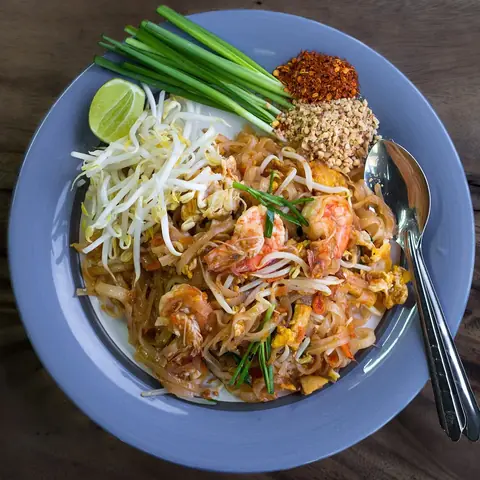 Pad thaiผัดไทยThai stir-fried rice noodles with tamarind, fish sauce, egg, tofu and prawns, topped with peanuts.
-
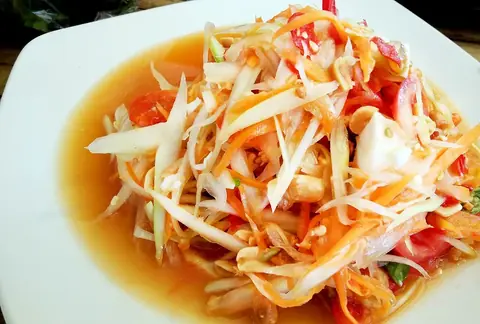 Som tamส้มตำSpicy pounded salad of green papaya with chilli, lime, fish sauce, dried shrimp and peanuts.
-
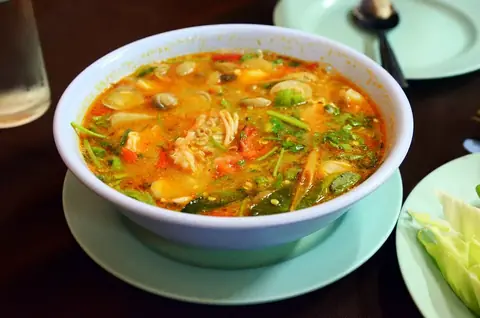 Tom yum goongต้มยำกุ้งHot and sour Thai prawn soup with lemongrass, galangal, lime leaves, chilli and lime.
Allergens to keep in mind
Fish sauce (nam pla) seasons most Thai dishes, so fish is a typical ingredient even in dishes that look vegetarian. Shrimp paste and dried shrimp (crustaceans), oyster sauce (molluscs), peanuts and soy sauce are also common. Recipes vary from stall to stall, so always ask if you have an allergy.