Dish guides
What is ramen?
ラーメン · rāmen
Ramen is a Japanese noodle soup: springy wheat noodles in a hot, rich broth, seasoned with soy sauce, salt or miso and topped with things like braised pork, a marinated egg and spring onions. In Japan it's sold in specialist ramen shops, where you often order from a ticket machine by the door.
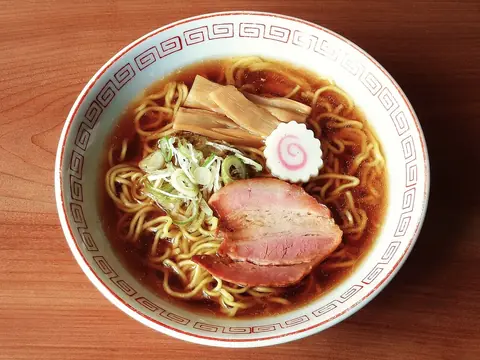
- At a glance
- Ramen
- Japanese noodle soup of wheat noodles in a soy, salt, miso or pork-bone broth.
- Pronunciation
- Say it like rah-men · IPA /ɾaːmeɴ/
- Also written as
- らーめん, 拉麺, 中華そば (chūka soba), shoyu ramen, shio ramen, miso ramen, tonkotsu ramen, tantanmen
What’s in it
Core ingredients
- wheat noodles made with kansui (alkaline water)
- broth (pork, chicken, fish or a mix)
- tare seasoning: soy sauce, salt or miso
- spring onions
Often added
- chāshū (braised pork)
- ajitama (marinated soft-boiled egg)
- menma (seasoned bamboo shoots)
- nori seaweed
- naruto fish cake
- bean sprouts and corn
- butter (Sapporo miso style)
- sesame paste and chilli oil (tantanmen)
Allergens
| Allergen | How likely |
|---|---|
| Gluten | Typically contains |
| Soy | Typically contains |
| Eggs | Often contains |
| Fish | Often contains |
| Sesame | Sometimes contains |
| Shellfish | Sometimes contains |
| Molluscs | Sometimes contains |
| Dairy | Sometimes contains |
| Peanuts | Rarely contains |
| Tree nuts | Rarely contains |
| Diet | Suitable? |
|---|---|
| Vegetarian | Depends — Most broths are made from pork, chicken or fish; some shops in big cities offer a vegetable or soy-milk broth, often marked as vegan ramen. |
| Vegan | Depends — Only at shops with a dedicated plant-based broth; check that the noodles contain no egg and skip the egg and pork toppings. |
| Pescatarian | Depends — Seafood-flavoured ramen still often has a pork or chicken base, so ask about the broth. |
| Halal | Depends — Regular ramen usually contains pork and cooking alcohol such as sake or mirin; halal-certified ramen shops exist in some large cities. |
| Kosher | No |
| Gluten-free | No |
Allergen and calorie details are AI estimates based on the menu and typical recipes. They can be incomplete — if you have a serious allergy, always check with the staff.
The main styles of ramen
Ramen bowls are usually named after their seasoning or broth:
- Shōyu (soy sauce): a clear brown broth, often chicken-based; the classic Tokyo style.
- Shio (salt): the lightest and clearest, sometimes with seafood in the stock.
- Miso: a fuller, nutty broth, associated with Sapporo, where it may come with corn and a knob of butter.
- Tonkotsu (pork bone): milky and rich, from bones boiled for hours; the speciality of Fukuoka (Hakata), with thin, straight noodles.
Many shops also sell tantanmen, a spicy sesame-and-chilli bowl derived from Chinese dan dan noodles, and tsukemen, where you dip the noodles into a separate bowl of thick broth. The yellow colour and bounce of ramen noodles come from kansui, an alkaline mineral water mixed into the wheat dough.
How ordering works in a ramen shop
Many ramen shops have a ticket machine (shokkenki) near the entrance. You put in cash, press the button for your bowl and any extras, and hand the ticket to the staff. Photos or plastic models often help when the buttons are only in Japanese. Some shops then ask how you want the noodles (katame = firm, futsū = normal, yawarakame = soft). In Hakata-style tonkotsu shops you can buy a kaedama, a second portion of noodles for your leftover broth.
Slurping is normal and not considered rude. Shops are often small counters where people eat quickly and leave, so lingering at busy times is unusual. Read more in the Japan menu guide.
Where ramen comes from
Ramen began as Chinese-style wheat noodle soup sold in Japan from the late 19th and early 20th centuries, which is why older names include shina soba and chūka soba ("Chinese soba"). It became a cheap, filling everyday meal after the Second World War, and each region developed its own style. Today it's treated as a Japanese dish in its own right, with shops that specialise in a single bowl.
How to order it
| Phrase | Romanization | Meaning |
|---|---|---|
| ラーメンを一つください。 | Rāmen o hitotsu kudasai. | One ramen, please. |
| 麺は硬めでお願いします。 | Men wa katame de onegai shimasu. | Firm noodles, please. |
| 魚介のだしは使っていますか? | Gyokai no dashi wa tsukatte imasu ka? | Do you use fish or seafood stock? |
Not to be confused with
- Udon — Thick, soft white wheat noodles in a light dashi broth; no alkaline water and usually no pork.
- Soba — Thin buckwheat noodles, served hot in dashi or cold with a dipping sauce.
- Tsukemen — A ramen-shop dish where cold or warm noodles come separately and you dip them in a thick, concentrated broth.
Frequently asked questions
Is ramen gluten free?
No, ramen is normally not gluten-free. The noodles are made from wheat, and most broths and tare are seasoned with soy sauce, which is usually brewed with wheat. A few shops make gluten-free versions with rice noodles and wheat-free seasoning, but they're uncommon in Japan, so check before you go rather than at the counter.
Is ramen vegetarian?
Usually not. Most ramen broths are made from pork bones, chicken or fish, and even miso or soy-based bowls often sit on an animal stock. Toppings such as chāshū pork and fish cake add more. Vegetarian and vegan ramen does exist, mostly in larger cities and at shops that advertise it clearly, so look for those.
What's the difference between ramen and udon?
Ramen has thin to medium yellow noodles made with alkaline water, served in a rich pork, chicken or fish broth with toppings like braised pork and egg. Udon has thick, soft white wheat noodles, usually in a lighter, clear dashi broth made from kelp and bonito. Ramen is bolder and fattier; udon is milder and simpler.
Does ramen contain egg?
Often, yes. The marinated soft-boiled egg (ajitama) is one of the most common toppings, and some ramen noodles are made with egg in the dough. If you avoid egg, ask for the bowl without the egg topping and check whether the noodles contain egg, since that can't be removed.
How do you pronounce ramen?
Say rah-men, with a long "ah" in the first syllable and a short, plain "men": in IPA, [ɾaːmeɴ]. The Japanese r is a light tap, somewhere between an English r, l and d. Japanese doesn't use strong stress, so keep both syllables fairly even.