Dish guides
What is udon?
うどん · udon
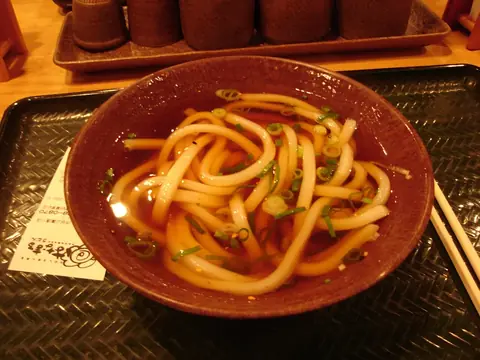
Udon are thick, soft-but-chewy Japanese noodles made from wheat flour, water and salt. They're served hot in a light broth of dashi and soy sauce, or chilled with a dipping sauce, and topped with anything from sweet fried tofu to tempura. Udon shops are among the cheapest and quickest sit-down meals in Japan.
- At a glance
- Udon
- Thick Japanese wheat noodles in a hot dashi broth or served cold with a dipping sauce.
- Pronunciation
- Say it like oo-dohn · IPA /ɯdoɴ/
- Also written as
- 饂飩, かけうどん (kake udon), きつねうどん (kitsune udon), 天ぷらうどん (tempura udon), ざるうどん (zaru udon), yaki udon, Sanuki udon, udon noodles
What’s in it
Core ingredients
- udon noodles (wheat flour, water, salt)
- dashi (kelp and bonito stock)
- soy sauce
- mirin
- spring onions
Often added
- sweet fried tofu (kitsune)
- tempura or tempura crumbs
- beef (niku udon)
- raw or soft egg
- kamaboko fish cake
- Japanese curry sauce
- shichimi chilli pepper
Allergens
| Allergen | How likely |
|---|---|
| Gluten | Typically contains |
| Fish | Typically contains |
| Soy | Typically contains |
| Eggs | Sometimes contains |
| Shellfish | Sometimes contains |
| Sesame | Sometimes contains |
| Dairy | Sometimes contains |
| Peanuts | Rarely contains |
| Tree nuts | Rarely contains |
| Diet | Suitable? |
|---|---|
| Vegetarian | Depends — The noodles are plain, but the broth and dipping sauces are almost always made with bonito (fish) dashi; kelp-only stock is mostly found at vegetarian or temple-food restaurants. |
| Vegan | Depends — Same as vegetarian: you need a kelp or mushroom dashi and toppings without egg or fish cake. |
| Pescatarian | Usually |
| Halal | Depends — Plain udon has no meat, but the broth is usually seasoned with mirin, which contains alcohol, and some toppings are meat. |
| Kosher | No |
| Gluten-free | No |
Allergen and calorie details are AI estimates based on the menu and typical recipes. They can be incomplete — if you have a serious allergy, always check with the staff.
Hot, cold and everything in between
Udon menus are organised around temperature and toppings:
- Kake udon: the basic bowl, noodles in hot broth with spring onions.
- Kitsune udon: topped with a sheet of sweet simmered fried tofu; associated with Osaka.
- Tanuki udon (Kanto) / haikara udon (Kansai): sprinkled with tempura crumbs.
- Tempura udon: with a prawn or vegetable tempura on top or on the side.
- Niku udon: with sweet-simmered beef.
- Zaru udon: chilled noodles on a bamboo tray, dipped into cold sauce.
- Kamatama: hot noodles straight from the pot tossed with raw egg and soy sauce.
- Curry udon: in a thick Japanese curry broth.
The broth is lighter in colour in western Japan, where cooks use pale soy sauce and more kelp, and darker and saltier around Tokyo.
Sanuki udon and self-service shops
Kagawa Prefecture on Shikoku, historically called Sanuki, is Japan's udon heartland, known for firm, springy noodles. Many Sanuki-style shops, in Kagawa and in chains across the country, work like a cafeteria: you order your noodles and size at the counter, add tempura or rice balls from the trays as you move along, and pay at the end. Portions are usually listed as small, medium and large (shō, chū, dai). Thinner regional styles include Inaniwa udon from Akita.
How udon is eaten
Udon is eaten with chopsticks, and slurping the noodles is normal. You can drink the broth from the bowl. Shichimi (seven-spice chilli) is usually on the table. With tempura on the side, you can dip it in the broth or eat it separately. If you're allergic to buckwheat, take care in shops that also serve soba: the two are often boiled in the same water or share strainers. Udon is common at lunchtime, in station noodle stands and as a light late-night meal. More menu words are in the Japan menu guide.
How to order it
| Phrase | Romanization | Meaning |
|---|---|---|
| かけうどんを一つください。 | Kake udon o hitotsu kudasai. | One plain udon in hot broth, please. |
| 温かいうどんでお願いします。 | Atatakai udon de onegai shimasu. | Hot udon, please (not chilled). |
| だしに魚は使っていますか? | Dashi ni sakana wa tsukatte imasu ka? | Is the broth made with fish? |
Not to be confused with
Frequently asked questions
Is udon gluten free?
No. Udon noodles are made from wheat flour, and the broth is seasoned with soy sauce, which usually contains wheat too. Gluten-free "udon-style" noodles made from rice or other starches exist in some shops and supermarkets, but they're rare in restaurants. Ordinary udon isn't suitable if you need to avoid gluten.
Is udon vegetarian?
The noodles are, but the dish usually isn't. Udon broth and dipping sauces are almost always made with dashi from bonito flakes or dried sardines, and toppings may include fish cake, beef or tempura fried alongside seafood. Vegetarian udon with kelp-only dashi exists mainly at specialist vegetarian or temple-cuisine restaurants.
What's the difference between udon and soba?
Udon are thick, white wheat noodles with a soft, chewy bite. Soba are thin, greyish-brown noodles made wholly or partly from buckwheat, with a nuttier taste. Both are served hot in dashi broth or cold with a dipping sauce, and many noodle shops sell both. Soba often still contains wheat, and buckwheat is a serious allergen for some people.
How do you pronounce udon?
Say oo-dohn, with both syllables fairly even: in IPA, [ɯdoɴ]. The first vowel is a short "oo" made without rounding the lips much, and the final n is soft, almost nasal. It isn't "you-don". On menus it often follows the topping, as in kitsune udon or tempura udon.