Dish guides
What is soba?
そば · soba
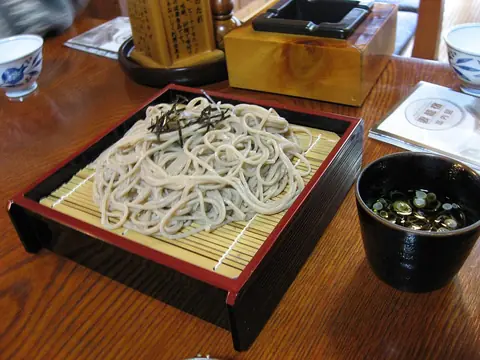
Soba are thin, greyish-brown Japanese noodles made from buckwheat flour, usually mixed with some wheat flour. They're eaten cold with a soy-and-dashi dipping sauce (zaru or mori soba) or hot in broth (kake soba), at everything from station standing counters to specialist soba restaurants. Buckwheat is a serious allergen, and Japan requires it to be declared on packaged food.
- At a glance
- Soba
- Japanese buckwheat noodles, cold with dipping sauce or hot in broth.
- Pronunciation
- Say it like soh-bah · IPA /soba/
- Also written as
- 蕎麦, ざるそば (zaru soba), もりそば (mori soba), かけそば (kake soba), 天ぷらそば (tempura soba), にしんそば (nishin soba), 山菜そば (sansai soba), buckwheat noodles
What’s in it
Core ingredients
- buckwheat flour
- wheat flour (in most soba)
- water
- tsuyu: soy sauce, mirin and dashi (bonito flakes and kelp)
- spring onion and wasabi
Often added
- shrimp or vegetable tempura
- raw or soft egg (tsukimi soba)
- fried tofu (kitsune soba)
- duck (kamo nanban)
- simmered herring (nishin soba)
- mountain vegetables (sansai)
- grated daikon
- shredded nori
- sesame or walnut dipping sauce
Allergens
| Allergen | How likely |
|---|---|
| Gluten | Typically contains |
| Soy | Typically contains |
| Fish | Typically contains |
| Shellfish | Sometimes contains |
| Eggs | Sometimes contains |
| Sesame | Sometimes contains |
| Tree nuts | Rarely contains |
| Dairy | Rarely contains |
| Peanuts | Rarely contains |
| Sulphites | Rarely contains |
| Diet | Suitable? |
|---|---|
| Vegetarian | Depends — The noodles are plant-based, but the dipping sauce and broth are almost always made with bonito (fish) dashi. Vegetarian soba with kelp or shiitake dashi exists but is uncommon. |
| Vegan | Depends — Same as for vegetarians: the problem is the fish-based dashi in the sauce and broth, and some toppings contain egg. |
| Pescatarian | Usually |
| Halal | Depends — Tsuyu usually contains mirin and sometimes sake, and toppings such as duck aren't halal-certified. |
| Kosher | Depends — Bonito and kelp dashi is fine in principle, but the dish is kosher only from a kosher-certified kitchen. |
| Gluten-free | Depends — Only 100% buckwheat soba (jūwari) served with a wheat-free sauce; standard soy sauce contains wheat and most soba contains wheat flour. |
Allergen and calorie details are AI estimates based on the menu and typical recipes. They can be incomplete — if you have a serious allergy, always check with the staff.
What soba is made of
Soba means buckwheat. Most soba noodles mix buckwheat flour with wheat flour, which makes them easier to roll and cut; a common ratio is ni-hachi, two parts wheat to eight parts buckwheat. Jūwari soba is 100% buckwheat, harder to make and more fragile, and specialist shops are proud of it. The dipping sauce or broth, tsuyu, is made from soy sauce, mirin and dashi, a stock of bonito flakes and kelp.
Hot or cold, and how to eat it
Zaru soba or mori soba is served cold on a bamboo tray with a small cup of concentrated tsuyu, spring onion and wasabi. Add the condiments to the cup, dip a mouthful of noodles and slurp; slurping is normal and polite. At the end, many shops bring sobayu, the hot noodle cooking water, to stir into the leftover sauce and drink like a soup.
Kake soba comes hot in a bowl of broth, with toppings that give each version its name: tempura soba with fried shrimp or vegetables, kitsune with sweet fried tofu, tsukimi with an egg, kamo nanban with duck, nishin soba with herring in Kyoto. Standing soba counters near stations often have a ticket machine at the door: pay, press the button for your dish and hand the ticket over.
Buckwheat allergy: an important warning
Buckwheat isn't one of the most common allergens in Europe or the US, but it can cause severe reactions, and in Japan it's one of the allergens that must be declared on packaged food. If you're allergic, be careful in shops that serve both soba and udon: some cook both in the same water or use the same strainers, so even udon may carry traces of buckwheat. For more on Japanese menus, see the Japan menu guide.
How to order it
| Phrase | Romanization | Meaning |
|---|---|---|
| ざるそばを一つください。 | Zaru soba o hitotsu kudasai. | One zaru soba (cold soba with dipping sauce), please. |
| 十割そばですか? | Jūwari soba desu ka? | Is it 100% buckwheat soba? |
| そばアレルギーがあります。うどんは別のお湯で茹でていますか? | Soba arerugī ga arimasu. Udon wa betsu no oyu de yudete imasu ka? | I'm allergic to buckwheat. Do you boil the udon in separate water? |
Not to be confused with
Frequently asked questions
Is soba gluten free?
Usually not. Most soba contains wheat flour, often 20 percent or more, and the dipping sauce and broth are made with soy sauce, which normally contains wheat. Only 100% buckwheat soba (jūwari) served with a wheat-free sauce avoids gluten, and cross-contact in a shared kitchen is still possible. Ask "Jūwari soba desu ka?" to check the noodles.
What is the difference between soba and udon?
Soba are thin, brownish noodles made mostly from buckwheat, with a nutty, earthy taste. Udon are thick, white, soft and chewy, and made only from wheat flour. Both come cold with dipping sauce or hot in a dashi-based broth, often with the same toppings, and many noodle shops in Japan serve both.
Can I eat soba if I'm allergic to buckwheat?
No. Buckwheat is the main ingredient of soba and buckwheat allergy can be severe. Take care even when ordering other dishes in a soba shop, because udon may be boiled in the same water and utensils are often shared. Say "Soba arerugī ga arimasu" (I'm allergic to buckwheat) and ask whether anything is cooked separately.
What is sobayu?
Sobayu is the hot, cloudy water the soba noodles were boiled in. After you finish a plate of cold zaru soba, many restaurants bring it in a small lacquered or wooden jug. Pour it into your leftover dipping sauce and drink it like a light soup. It's part of the traditional soba meal, not a mistake.
How do you pronounce soba?
Say "soh-bah", in IPA [soba], with two short, even syllables. Japanese uses pitch rather than English-style stress, so don't lean hard on either syllable. In Japanese script it's written そば or 蕎麦, and on menus you'll often see it as part of compounds such as zarusoba or kakesoba.