Dish guides
What is karaage?
唐揚げ · karaage
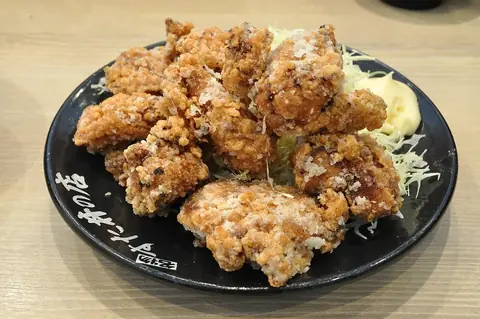
Karaage is Japanese fried chicken: bite-sized pieces of boneless chicken, usually thigh, marinated in soy sauce, sake, ginger and garlic, coated in potato starch or flour and deep-fried until crisp. It's a staple of izakaya menus, set-meal restaurants, bento boxes and convenience stores, usually served with lemon.
- At a glance
- Karaage
- Japanese fried chicken, marinated in soy, sake and ginger and coated in starch.
- Pronunciation
- Say it like kah-rah-ah-geh · IPA /kaɾaːɡe/
- Also written as
- から揚げ, からあげ, 鶏の唐揚げ (tori no karaage), 唐揚げ定食 (karaage teishoku), chicken karaage, tori karaage, 竜田揚げ (tatsuta-age)
What’s in it
Core ingredients
- chicken thigh pieces
- soy sauce
- sake
- ginger
- garlic
- potato starch (katakuri-ko) and/or wheat flour
- frying oil
Often added
- lemon wedge
- Japanese mayonnaise
- shredded cabbage
- rice, miso soup and pickles (teishoku set)
- shichimi chilli pepper
Allergens
| Allergen | How likely |
|---|---|
| Gluten | Typically contains |
| Soy | Typically contains |
| Eggs | Often contains |
| Fish | Sometimes contains |
| Molluscs | Sometimes contains |
| Sesame | Sometimes contains |
| Shellfish | Sometimes contains |
| Dairy | Rarely contains |
| Peanuts | Rarely contains |
| Tree nuts | Rarely contains |
| Diet | Suitable? |
|---|---|
| Vegetarian | No |
| Vegan | No |
| Pescatarian | No |
| Halal | Depends — Ordinary chicken in Japan isn't halal-slaughtered and the marinade usually contains sake; halal karaage is sold only at restaurants that cater to Muslim guests. |
| Kosher | No |
| Gluten-free | No |
Allergen and calorie details are AI estimates based on the menu and typical recipes. They can be incomplete — if you have a serious allergy, always check with the staff.
What karaage is like
Karaage pieces are irregular, roughly golf-ball sized and craggy, with a thin, crisp, often slightly crackly crust and juicy meat inside. The flavour comes from the marinade rather than from a sauce: soy sauce, sake, ginger and garlic soak into the chicken before it's dusted with potato starch or flour. Many cooks fry it twice for extra crunch.
It usually comes with a wedge of lemon, shredded cabbage and sometimes a dab of mayonnaise. In Japan, whether to squeeze lemon over a shared plate is a running debate, so it's polite to ask the table first. Tatsuta-age is a close variation, marinated in soy sauce and mirin and coated in potato starch, with a reddish-brown crust.
Where karaage comes from
The name is usually read as "Chinese-style frying" (kara written 唐, for Tang China), though the same sound can mean "empty", which leads some to explain it as frying without batter. Chicken karaage became a popular "Chinese-style" restaurant dish in the 1930s and a home-cooking favourite after the Second World War.
Typical price
Median price 720 JPY
Typical range 540–1300 JPY.
Median of 39 menus, 2025-04 – 2026-04. Basis: Japanese-language menus scanned with MenuGuide; includes karaage set meals.
How to order it
| Phrase | Romanization | Meaning |
|---|---|---|
| 唐揚げを一つください。 | Karaage o hitotsu kudasai. | One karaage, please. |
| 鶏の唐揚げですか? | Tori no karaage desu ka? | Is it chicken karaage? |
| 醤油や小麦は使っていますか? | Shōyu ya komugi wa tsukatte imasu ka? | Do you use soy sauce or wheat? |
Not to be confused with
- Tempura — Seafood and vegetables in a thin, light batter, not marinated; dipped in sauce or salt after frying.
- Tonkatsu — A whole pork cutlet coated in panko breadcrumbs, sliced and eaten with a thick sauce.
- Chicken nanban — A Miyazaki dish of fried chicken dipped in sweet vinegar and topped with tartar sauce.
Frequently asked questions
What's the difference between karaage and Japanese fried chicken?
They're the same thing: karaage is the dish usually called Japanese fried chicken in English. Compared with Southern-style fried chicken, karaage uses small boneless pieces, gets its flavour from a soy, sake and ginger marinade, and has a thin starch coating instead of a thick seasoned breading.
Is karaage gluten free?
Usually not. The marinade relies on soy sauce, which is normally brewed with wheat, and many cooks coat the chicken in wheat flour or a mix of flour and starch. Versions made only with potato starch and wheat-free soy sauce exist, but you'd need to ask, and fryers are shared.
Is karaage always chicken?
Mostly, but not always. Karaage is a cooking method, so menus also list fish, octopus (tako), squid and chicken cartilage (nankotsu) karaage. If the menu just says karaage, it almost always means chicken; asking "Tori no karaage desu ka?" confirms it.
How do you pronounce karaage?
Say kah-rah-ah-geh, four beats with a hard g: in IPA, [kaɾaːɡe]. The two a sounds in the middle run together into one long "aa", and the r is a light tap. It doesn't rhyme with "garage". On menus it's often written 唐揚げ or から揚げ.