Dish guides
What is gyoza?
餃子 · gyōza
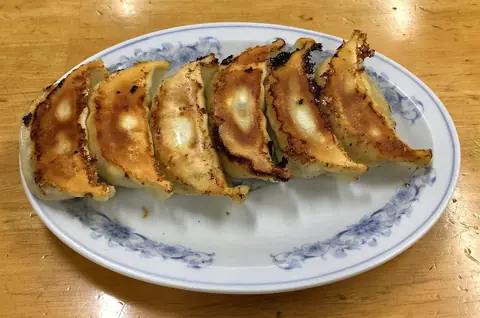
Gyoza are Japanese dumplings: thin wheat wrappers filled with minced pork, cabbage or Chinese chives, garlic and ginger, pan-fried so the bottoms turn crisp while the tops steam soft. They're dipped in soy sauce, rice vinegar and chilli oil, and eaten as a side at ramen shops, as a set meal with rice, or with beer.
- At a glance
- Gyoza
- Japanese pan-fried dumplings of pork, cabbage and garlic in thin wheat wrappers.
- Pronunciation
- Say it like gyoh-zah · IPA /ɡʲoːza/
- Also written as
- ギョーザ, ギョウザ, 焼き餃子 (yaki-gyōza), 水餃子 (sui-gyōza), 揚げ餃子 (age-gyōza), potstickers, yasai gyoza, pork gyoza
What’s in it
Core ingredients
- thin wheat-flour wrappers
- minced pork
- cabbage and/or Chinese chives (nira)
- garlic and ginger
- soy sauce
- sesame oil
Often added
- dipping sauce of soy sauce, rice vinegar and rāyu (chilli oil)
- prawns
- chicken or chicken skin
- vegetable-only filling (yasai gyōza)
- shiso leaf
- oyster sauce in the filling
Allergens
| Allergen | How likely |
|---|---|
| Gluten | Typically contains |
| Soy | Typically contains |
| Sesame | Typically contains |
| Shellfish | Sometimes contains |
| Molluscs | Sometimes contains |
| Eggs | Rarely contains |
| Fish | Rarely contains |
| Dairy | Rarely contains |
| Peanuts | Rarely contains |
| Tree nuts | Rarely contains |
| Diet | Suitable? |
|---|---|
| Vegetarian | Depends — Vegetable gyoza (yasai gyōza) are on many menus, especially outside Japan; in ordinary Japanese gyoza shops nearly everything contains pork. |
| Vegan | Depends — Vegetable fillings are often vegan, but check for egg, fish-based seasonings and shared frying pans. |
| Pescatarian | Depends — Only prawn or vegetable versions; the standard filling is pork. |
| Halal | No |
| Kosher | No |
| Gluten-free | No |
Allergen and calorie details are AI estimates based on the menu and typical recipes. They can be incomplete — if you have a serious allergy, always check with the staff.
How gyoza are cooked and served
The classic Japanese way is yaki-gyōza: the dumplings are lined up in a hot oiled pan until the bottoms brown, then a splash of water is added and the pan is covered so they steam. The result is crisp and golden underneath, soft and slightly translucent on top. Some shops pour in a thin flour-and-water mixture that fries into a lacy sheet joining the dumplings, called hanetsuki ("with wings").
Other styles are sui-gyōza (boiled, sometimes in soup) and age-gyōza (deep-fried). A plate usually holds five or six. You mix your own dipping sauce from the bottles on the table: soy sauce, vinegar and a few drops of rāyu chilli oil. Some people skip the soy sauce and dip them in vinegar with black pepper.
Where gyoza appear on Japanese menus
Gyoza are the standard side order at ramen shops and at Chinese-style restaurants (chūka). In Japan they're also eaten with rice as a main meal, and chains and specialist gyoza shops sell set meals of gyoza, rice and soup. They're popular with beer at izakaya. Utsunomiya and Hamamatsu both have reputations as gyoza cities, with many specialist shops.
Japanese gyoza tend to be smaller and more garlicky than Chinese dumplings, with thinner wrappers. Outside Japan, "gyoza" on a menu usually means the pan-fried style, often with chicken, prawn or vegetable fillings as well as pork.
Where gyoza come from
Gyoza come from Chinese jiaozi. Japanese people who had lived in northeast China brought the dish home after the Second World War, and it spread quickly as cheap, filling food. In Japan, frying became the default, while in northern China boiling is more common. Where the reading gyōza for the characters 餃子 comes from is debated; a northeastern Chinese or Manchu pronunciation is the usual explanation.
How to order it
| Phrase | Romanization | Meaning |
|---|---|---|
| 焼き餃子を一皿ください。 | Yaki-gyōza o hito-sara kudasai. | One plate of pan-fried gyoza, please. |
| 豚肉は入っていますか? | Butaniku wa haitte imasu ka? | Is there pork in it? |
| ごま油は使っていますか? | Goma-abura wa tsukatte imasu ka? | Do you use sesame oil? |
Not to be confused with
- Jiaozi — The Chinese original: often thicker wrappers, often boiled, and eaten as a main food rather than a side.
- Shūmai — Open-topped steamed dumplings of pork or prawn, gathered at the top rather than folded shut.
- Xiaolongbao — Chinese steamed soup dumplings with pleated tops and hot broth inside.
Frequently asked questions
What are gyoza made of?
Gyoza are made of thin wheat-flour wrappers filled with minced pork, finely chopped cabbage or Chinese chives, garlic and ginger, seasoned with soy sauce and sesame oil. Some shops add prawns, chicken or shiso leaf, and vegetable-only gyoza are common outside Japan. They're dipped in soy sauce, vinegar and chilli oil.
Is gyoza gluten free?
No, not usually. The wrappers are made from wheat flour, and the filling and dipping sauce are seasoned with soy sauce, which normally contains wheat. Gluten-free gyoza with rice-flour wrappers exist from a few producers, but you're unlikely to find them in an ordinary restaurant in Japan.
What's the difference between gyoza and potstickers?
They're closely related. Potsticker is the English name for Chinese guotie, dumplings fried on one side and steamed, which is exactly how Japanese yaki-gyōza are cooked. Japanese gyoza usually have thinner wrappers, finer and more garlicky fillings and are a bit smaller than Chinese potstickers.
How do you pronounce gyoza?
Say gyoh-zah, two syllables, with the g and y blended into one sound, like the "gu" in "argue", and a long "oh": in IPA, [ɡʲoːza]. Avoid saying "guy-oh-za" or "jee-oh-za". The long vowel is why it's romanised gyōza. On Japanese menus it's written 餃子 or ギョーザ.