Dish guides
What is sashimi?
刺身 · sashimi
Sashimi is sliced raw fish or seafood served on its own, without rice, usually with soy sauce, a little wasabi and a garnish of shredded daikon radish and a shiso leaf. Tuna, salmon, yellowtail, sea bream, squid, octopus and prawns are typical. In Japan it's ordered as a platter at izakaya and restaurants, or as a set meal with rice and miso soup.
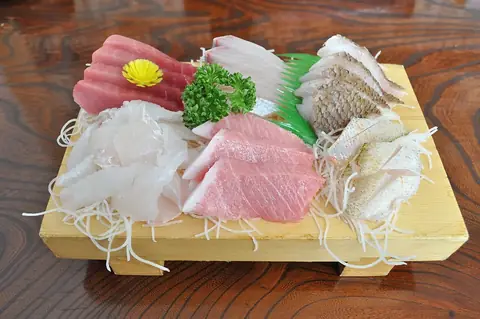
- At a glance
- Sashimi
- Sliced raw fish or seafood without rice, served with soy sauce, wasabi and daikon.
- Pronunciation
- Say it like sah-shee-mee · IPA /saɕimi/
- Also written as
- お刺身 (osashimi), お造り (otsukuri), 刺身盛り合わせ (sashimi moriawase, assorted), 刺身定食 (sashimi teishoku, set meal), maguro sashimi (tuna), salmon sashimi
What’s in it
Core ingredients
- very fresh raw fish or seafood, sliced
- soy sauce for dipping
- wasabi
Often added
- tuna (maguro, including fatty toro)
- salmon (sāmon)
- yellowtail (hamachi or buri)
- sea bream (tai)
- squid (ika) and octopus (tako, usually boiled)
- sweet prawns (amaebi)
- scallop (hotate)
- sea urchin (uni)
- shredded daikon and shiso leaf (tsuma)
- pickled ginger
- ponzu (citrus soy) for some fish
Allergens
| Allergen | How likely |
|---|---|
| Fish | Typically contains |
| Soy | Typically contains |
| Gluten | Typically contains |
| Shellfish | Often contains |
| Molluscs | Often contains |
| Mustard | Sometimes contains |
| Sesame | Rarely contains |
| Eggs | Rarely contains |
| Dairy | Rarely contains |
| Peanuts | Rarely contains |
| Tree nuts | Rarely contains |
| Diet | Suitable? |
|---|---|
| Vegetarian | No |
| Vegan | No |
| Pescatarian | Usually |
| Halal | Depends — Fish is generally accepted as halal, but soy sauce and some dipping sauces contain alcohol from fermentation or added mirin and sake, and views on some seafood differ between schools. |
| Kosher | Depends — Only fish with fins and scales are kosher (tuna, salmon and sea bream are; eel, squid, octopus and shellfish aren't), and Japanese restaurants are very rarely under kosher supervision. |
| Gluten-free | Depends — The fish is gluten-free, but ordinary Japanese soy sauce is brewed with wheat. Tamari is usually wheat-free or low in wheat; many people bring their own gluten-free soy sauce. |
Allergen and calorie details are AI estimates based on the menu and typical recipes. They can be incomplete — if you have a serious allergy, always check with the staff.
What's on a sashimi plate
Sashimi is all about freshness and the cut. Fish is sliced to suit its texture: thick, domino-sized pieces for tuna and salmon, thin slices for firmer white fish. It's laid over a nest of shredded daikon radish with a shiso leaf, both edible, and served with soy sauce and wasabi. A moriawase (assorted platter) mixes several kinds.
Common choices are maguro (tuna, from lean akami to fatty toro), sāmon (salmon), hamachi or buri (yellowtail), tai (sea bream), saba (mackerel, often lightly cured with salt and vinegar), ika (squid), tako (octopus, normally boiled), amaebi (sweet prawns), hotate (scallop) and uni (sea urchin). Some regions also serve meat sashimi, such as horse (basashi) or raw or lightly seared chicken (torisashi, a real food-poisoning risk), clearly named on the menu.
Typical price
Median price 1290 JPY
Typical range 740–2040 JPY.
Median of 28 menus, 2025-05 – 2026-05. Basis: Japanese-language menus scanned with MenuGuide; includes sashimi set meals and assorted platters.
How to order it
| Phrase | Romanization | Meaning |
|---|---|---|
| 刺身の盛り合わせをお願いします。 | Sashimi no moriawase o onegai shimasu. | An assorted sashimi platter, please. |
| エビやイカは入っていますか? | Ebi ya ika wa haitte imasu ka? | Are there prawns or squid in it? |
| 甲殻類アレルギーがあります。 | Kōkakurui arerugī ga arimasu. | I have a crustacean (shellfish) allergy. |
Not to be confused with
- Sushi — Any dish made with vinegared rice; nigiri is a slice of fish on a mound of rice. Sashimi has no rice.
- Tataki — Fish (often bonito) or beef seared briefly on the outside and served sliced, raw in the centre; often counted as a kind of sashimi.
- Carpaccio — Italian paper-thin raw beef (or fish) dressed with oil, lemon and cheese.
Frequently asked questions
What's the difference between sashimi and sushi?
Sashimi is sliced raw fish or seafood served on its own, without rice. Sushi is any dish made with vinegared rice: nigiri is a slice of fish pressed onto rice, and rolls wrap rice and fillings in seaweed. Many sushi toppings are the same fish used for sashimi, and restaurants often serve both.
Is sashimi always raw?
Mostly, but not always. Tuna, salmon, yellowtail, squid and most white fish are served raw. Octopus is usually boiled, mackerel is often cured with salt and vinegar, and tataki is seared on the outside. If you need to avoid raw fish, for example during pregnancy, ask which items are cooked, or choose a cooked dish instead.
Is sashimi gluten free?
The fish itself is, but the standard soy sauce isn't: Japanese soy sauce is brewed from soybeans and wheat. Ask whether the restaurant has tamari or gluten-free soy sauce, or bring your own. Also check marinated items such as zuke (soy-marinated tuna), which are seasoned before they reach you.
How do you pronounce sashimi?
Say sah-shee-mee, with roughly even stress: in IPA, [saɕimi]. English speakers often stress the middle syllable, which is fine. The polite form osashimi is common, and in western Japan and at formal restaurants the dish is often called otsukuri (お造り).