Dish guides
What is miso soup?
味噌汁 · misoshiru
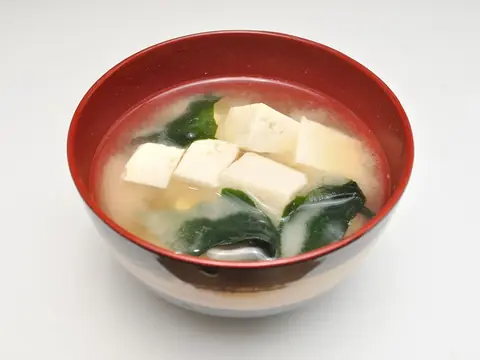
Miso soup (misoshiru) is Japan's everyday soup: miso, a fermented soybean paste, dissolved in dashi stock and served with a few simple ingredients such as tofu, wakame seaweed and spring onion. In Japan it comes with most set meals and traditional breakfasts, alongside rice, and you drink it straight from the bowl.
- At a glance
- Miso soup
- Fermented soybean paste dissolved in dashi stock, with tofu, wakame and spring onion.
- Pronunciation
- Say it like mee-soh-shee-roo · IPA /misoɕiɾɯ/
- Also written as
- みそ汁, お味噌汁 (omisoshiru), miso shiru, 赤だし (akadashi, red miso soup), しじみ汁 (shijimi-jiru, with clams), あさりの味噌汁 (with asari clams), omiotsuke
What’s in it
Core ingredients
- miso (fermented soybean paste, often with rice or barley)
- dashi stock (usually bonito flakes and/or kelp, or dried sardines)
Often added
- tofu
- wakame seaweed
- spring onion (negi)
- deep-fried tofu (aburaage)
- mushrooms such as nameko or shiitake
- clams (asari or shijimi)
- daikon, potato or other vegetables
- prawn heads or fish (at some sushi restaurants)
- pork (tonjiru)
Allergens
| Allergen | How likely |
|---|---|
| Soy | Typically contains |
| Fish | Typically contains |
| Gluten | Sometimes contains |
| Molluscs | Sometimes contains |
| Shellfish | Sometimes contains |
| Sesame | Rarely contains |
| Eggs | Rarely contains |
| Dairy | Rarely contains |
| Peanuts | Rarely contains |
| Tree nuts | Rarely contains |
| Diet | Suitable? |
|---|---|
| Vegetarian | Depends — Most restaurant miso soup uses dashi made with bonito flakes or dried sardines, and many ready-made misos already contain bonito dashi (dashi-iri miso). Kelp- or shiitake-only dashi is vegetarian, and it's standard in Buddhist temple cooking (shōjin ryōri), but it has to be asked for. |
| Vegan | Depends — Same as vegetarian; miso, tofu and seaweed are plant-based. |
| Pescatarian | Usually |
| Halal | Depends — There's normally no meat (except in tonjiru), but some commercial miso contains added alcohol as a preservative, and cooking sake is sometimes used; ask. |
| Kosher | Depends — Clam and prawn versions aren't kosher, and restaurant kitchens in Japan are very rarely under kosher supervision. |
| Gluten-free | Depends — Rice miso is normally gluten-free, but barley miso (mugi miso) and some blended misos and instant dashi contain wheat or barley, and soybean miso can be made with roasted barley flour in its koji. |
Allergen and calorie details are AI estimates based on the menu and typical recipes. They can be incomplete — if you have a serious allergy, always check with the staff.
What's in a bowl of miso soup
Two things make miso soup. Dashi is a light stock, most often made from katsuobushi (dried, smoked bonito shaved into flakes) and kombu kelp, or from dried sardines (niboshi); many restaurants use instant dashi granules, which are also fish-based. Miso is stirred in at the end, off the boil, so its aroma survives.
The type of miso shapes the soup. Rice miso (kome miso) is the most common in much of Japan; barley miso (mugi miso) is typical in Kyushu, Shikoku and western Honshu; soybean miso (mame miso, such as hatchō miso) is dark and strong, used for the red akadashi served at many sushi restaurants. Toppings are kept simple and seasonal: tofu and wakame, clams, mushrooms, daikon or deep-fried tofu.
How to order it
| Phrase | Romanization | Meaning |
|---|---|---|
| 味噌汁をひとつください。 | Misoshiru o hitotsu kudasai. | One miso soup, please. |
| だしに鰹節を使っていますか? | Dashi ni katsuobushi o tsukatte imasu ka? | Is the stock made with bonito (fish) flakes? |
| 味噌に小麦は入っていますか? | Miso ni komugi wa haitte imasu ka? | Is there wheat in the miso? |
Not to be confused with
- Tonjiru (豚汁) — A hearty miso soup with pork and root vegetables, served as a dish in its own right.
- Suimono (吸い物) — A clear soup of dashi seasoned with salt and soy sauce, with no miso.
- Miso ramen — Wheat noodles in a rich pork or chicken broth seasoned with miso; a full meal, not a side soup.
Frequently asked questions
Is miso soup vegetarian?
Usually not. Miso and the common toppings are plant-based, but the dashi stock is normally made with bonito flakes or dried sardines, including the instant granules most restaurants use. Kelp or shiitake dashi is vegetarian, and Buddhist temple restaurants (shōjin ryōri) use it, but in an ordinary restaurant you'd need to ask.
Is miso soup gluten free?
Not reliably. Rice miso is normally gluten-free, but barley miso is common in parts of Japan, soybean miso can contain a little roasted barley, some blended misos and instant dashi products contain wheat, and it's hard to check in a restaurant. If you're coeliac, ask "Miso ni komugi wa haitte imasu ka?" and treat the answer with caution.
How do you eat miso soup in Japan?
Hold the bowl in one hand and drink directly from it; Japanese restaurants rarely provide a spoon for miso soup. Use chopsticks for the tofu, seaweed and other pieces, and give the soup a quick stir with them if the miso has settled. It's normal to alternate sips of soup with mouthfuls of rice.
How do you pronounce misoshiru?
Say mee-soh-shee-roo, with even stress on each syllable: in IPA, [misoɕiɾɯ]. The final u is short and unrounded, and the r is a light tap, close to a d. Shiru means soup, so misoshiru is simply miso soup; the polite form is omisoshiru.