Dish guides
What is pasta alla gricia?
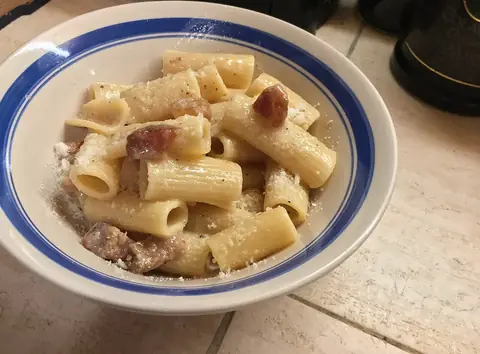
Pasta alla gricia is a Roman pasta dish made with guanciale (cured pork cheek), pecorino romano and black pepper, with no egg and no tomato. It's often described as the oldest of Rome's classic pastas and is sometimes called "amatriciana bianca". You'll see it as rigatoni, mezze maniche or tonnarelli alla gricia.
- At a glance
- Pasta alla gricia
- Roman pasta with crisp guanciale, pecorino romano and black pepper.
- Pronunciation
- Say it like PAHS-tah AHL-lah GREE-chah · IPA /ˈpasta alla ˈɡriːtʃa/
- Also written as
- gricia, rigatoni alla gricia, mezze maniche alla gricia, tonnarelli alla gricia, amatriciana bianca
What’s in it
Core ingredients
- pasta (rigatoni, mezze maniche, tonnarelli or spaghetti)
- guanciale (cured pork cheek)
- pecorino romano
- black pepper
- starchy pasta cooking water
Often added
- a splash of dry white wine
- pancetta instead of guanciale (outside Lazio)
- artichokes or courgettes (seasonal restaurant versions)
Allergens
| Allergen | How likely |
|---|---|
| Gluten | Typically contains |
| Dairy | Typically contains |
| Eggs | Sometimes contains |
| Sulphites | Rarely contains |
| Peanuts | Rarely contains |
| Tree nuts | Rarely contains |
| Shellfish | Rarely contains |
| Fish | Rarely contains |
| Soy | Rarely contains |
| Sesame | Rarely contains |
| Diet | Suitable? |
|---|---|
| Vegetarian | No |
| Vegan | No |
| Pescatarian | No |
| Halal | No |
| Kosher | No |
| Gluten-free | Depends — Only when it's made with gluten-free pasta (pasta senza glutine), which some restaurants offer on request. |
Allergen and calorie details are AI estimates based on the menu and typical recipes. They can be incomplete — if you have a serious allergy, always check with the staff.
What goes into a gricia
Guanciale is cut into strips or cubes and cooked gently until the fat melts and the meat turns crisp and golden. Some cooks add a splash of white wine. The pasta goes into the pan with the guanciale and its fat, plus a little cooking water, and is tossed with plenty of finely grated pecorino romano and black pepper until the cheese melts into a light, glossy coating.
Think of it as cacio e pepe with pork. It's salty and peppery, and tastes strongly of guanciale, so the quality of the meat matters more than in any other Roman pasta.
Where the name comes from
Gricia is usually considered the ancestor of amatriciana: add tomato and you get the red version. The origin of the name is uncertain. One theory points to Grisciano, a hamlet near Amatrice. Another links it to the grici, sellers of everyday foods in papal Rome, many of whom were said to come from the Alpine Valtellina, then ruled by the Swiss canton of Grigioni. Either way, it belongs to Rome's four classic pastas together with carbonara, amatriciana and cacio e pepe.
How to order it
| Phrase | Meaning |
|---|---|
| Vorrei i rigatoni alla gricia, per favore. | I'd like the rigatoni alla gricia, please. |
| La pasta è all'uovo? | Is the pasta made with egg? |
Not to be confused with
- Carbonara — Gricia plus egg yolks, which make the sauce creamy and yellow.
- Amatriciana — Gricia plus tomato, giving a red sauce.
- Cacio e pepe — The same pecorino and pepper, but no guanciale.
Frequently asked questions
What's the difference between gricia and carbonara?
Gricia is guanciale, pecorino romano and black pepper. Carbonara uses exactly the same base and adds egg yolks, which make the sauce thicker, creamier and yellow. If you're allergic to eggs or avoid undercooked egg, gricia is the closest alternative to carbonara, though the pasta itself may contain egg.
Does pasta alla gricia have egg?
The sauce doesn't. Gricia is made without egg, unlike carbonara. The pasta can contain egg, though: tonnarelli, a fresh pasta popular in Rome, are usually made with eggs, while dried rigatoni, mezze maniche and spaghetti normally aren't. If you're allergic, ask "La pasta è all'uovo?" (Is the pasta made with egg?).
Is gricia the same as amatriciana bianca?
Yes. "Amatriciana bianca" (white amatriciana) is another name for gricia, because the two dishes are identical apart from the tomato in amatriciana. You might see either name on a menu. Some menus also use "bianca" loosely for any white sauce, so check the description for guanciale and pecorino.
How do you pronounce gricia?
Say GREE-chah, with two syllables and the stress on the first. The ci makes a ch sound as in church, and the i after the c isn't pronounced separately. In IPA it's [ˈɡriːtʃa]. On a menu, alla gricia is said AHL-lah GREE-chah.