Dish guides
What is Wiener Schnitzel?
Wiener Schnitzel is a thin, pounded veal cutlet coated in flour, egg and breadcrumbs and fried until the crust puffs up golden. It's Austria's best-known dish, served with a lemon wedge and potato salad or parsley potatoes. Under Austrian and German food guidelines the name alone means veal, so a pork version should be labelled "Schnitzel Wiener Art" or "vom Schwein".
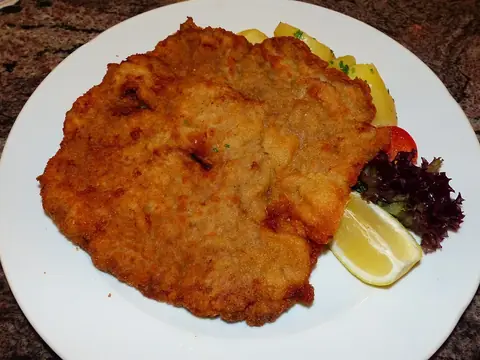
- At a glance
- Wiener Schnitzel
- Austrian veal cutlet in flour, egg and breadcrumbs, fried golden.
- Pronunciation
- Say it like VEE-ner SHNIT-sl · IPA /ˈviːnɐ ˈʃnɪtsl̩/
- Also written as
- Wiener Schnitzel vom Kalb, Schnitzel Wiener Art, Wiener Schnitzel vom Schwein, Wienerschnitzel, Kalbsschnitzel paniert
What’s in it
Core ingredients
- veal cutlet, pounded thin
- wheat flour
- egg
- breadcrumbs (Semmelbrösel)
- lard, clarified butter or oil for frying
- lemon wedge
Often added
- Austrian potato salad (Erdäpfelsalat)
- parsley potatoes
- lingonberry jam (Preiselbeeren)
- green or lamb's lettuce salad
- fries (more common in Germany)
- pork or turkey instead of veal
Allergens
| Allergen | How likely |
|---|---|
| Gluten | Typically contains |
| Eggs | Typically contains |
| Dairy | Often contains |
| Mustard | Sometimes contains |
| Sulphites | Sometimes contains |
| Celery | Rarely contains |
| Peanuts | Rarely contains |
| Tree nuts | Rarely contains |
| Shellfish | Rarely contains |
| Fish | Rarely contains |
| Soy | Rarely contains |
| Sesame | Rarely contains |
| Diet | Suitable? |
|---|---|
| Vegetarian | No |
| Vegan | No |
| Pescatarian | No |
| Halal | Depends — Veal isn't pork, but restaurant meat is rarely halal-certified, the traditional frying fat is lard, and "Wiener Art" versions are usually pork. |
| Kosher | No |
| Gluten-free | No |
Allergen and calorie details are AI estimates based on the menu and typical recipes. They can be incomplete — if you have a serious allergy, always check with the staff.
How a Wiener Schnitzel is made
A slice of veal, usually from the leg, is butterflied and pounded to a few millimetres thick, then salted and turned in flour, beaten egg and fine breadcrumbs. The crumbs are only pressed on lightly. It's fried in plenty of hot fat, traditionally lard or clarified butter, and the pan is shaken so the hot fat washes over the top. That's what makes the crust lift away from the meat in golden waves, the sign of a well-made Schnitzel.
It should arrive crisp and dry, not greasy, and usually overhangs the plate. A wedge of lemon is always served with it.
Veal or pork: read the menu carefully
Food guidelines in Austria and Germany reserve the name Wiener Schnitzel for veal. Pork versions should be labelled Schnitzel Wiener Art ("Viennese-style schnitzel"), Schweineschnitzel Wiener Art or, in Austria, Wiener Schnitzel vom Schwein, and turkey ones the same way, e.g. Putenschnitzel Wiener Art. Not every menu sticks to the rule, so ask if it matters to you. The pork version is perfectly good and often much cheaper; it just isn't the original. Menus also list other schnitzels: Jägerschnitzel comes with mushroom sauce, and a German Paprikaschnitzel with a pepper sauce. These sauces often contain cream and flour.
Typical price
Median price 18 EUR
Typical range 14–32.5 EUR.
Median of 54 menus, 2025-04 – 2026-05. Basis: German-language menus scanned with MenuGuide; veal and pork (Wiener Art) versions.
How to order it
| Phrase | Meaning |
|---|---|
| Ich hätte gern ein Wiener Schnitzel mit Erdäpfelsalat, bitte. | I'd like a Wiener Schnitzel with potato salad, please. |
| Ist das Schnitzel vom Kalb oder vom Schwein? | Is the schnitzel veal or pork? |
| Wird es in Butterschmalz oder in Schweineschmalz gebacken? | Is it fried in clarified butter or in lard? |
Not to be confused with
- Schnitzel Wiener Art — The same breaded and fried cutlet made with pork (sometimes turkey) instead of veal; usually cheaper.
- Cotoletta alla milanese — Milan's breaded veal, traditionally a thicker bone-in chop fried in butter.
- Tonkatsu — Japanese breaded pork cutlet in coarse panko, sliced and served with a thick sauce and cabbage.
Frequently asked questions
What's the difference between Wiener Schnitzel and Schnitzel Wiener Art?
The meat. A Wiener Schnitzel is made from veal, and Austrian and German food guidelines reserve the name for veal. Schnitzel Wiener Art, or "Wiener Schnitzel vom Schwein", is the same breaded and fried cutlet made from pork. It's cheaper and very common, so check the wording on the menu or ask "vom Kalb oder vom Schwein?"
Is Wiener Schnitzel Austrian or German?
It's Austrian: "Wiener" means "from Vienna", and it's one of the national dishes of Austria. It's just as common on menus in Germany and South Tyrol, often made with pork there, and the Italian cotoletta alla milanese is a close relative. Austrians usually serve it with potato salad, while Germans often add fries.
Is Wiener Schnitzel gluten free?
No. The cutlet is coated in wheat flour and breadcrumbs before frying, so it contains gluten. A few restaurants offer a gluten-free schnitzel breaded with gluten-free crumbs or cornflakes, but it's not standard. Note that the egg in the coating is also a concern if you're allergic to eggs.
How do you pronounce Wiener Schnitzel?
Say VEE-ner SHNIT-sl, with the stress on the first syllable of each word: in IPA, [ˈviːnɐ ˈʃnɪtsl̩]. The "W" sounds like an English "v", and the final "-el" is almost swallowed. Austrians often just say "a Schnitzl" when ordering. Wiener simply means "Viennese".