Dish guides
What is tiramisu?
Tiramisù
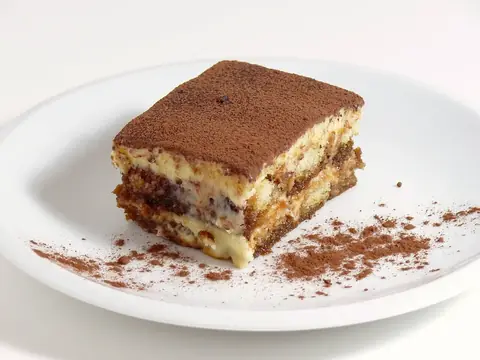
Tiramisu is a layered Italian dessert of ladyfingers (savoiardi) dipped in espresso and covered with a cream of mascarpone, egg yolks and sugar, finished with bitter cocoa powder. It comes from north-eastern Italy and is served cold, usually by the spoonful from a dish or glass, in the dolci section of the menu.
- At a glance
- Tiramisu
- Coffee-soaked ladyfingers layered with mascarpone cream and cocoa.
- Pronunciation
- Say it like tee-rah-mee-SOO · IPA /tiramiˈsu/
- Also written as
- tiramisù, tiramisù della casa, tiramisù classico, tiramisu al caffè, tiramisù al bicchiere
What’s in it
Core ingredients
- savoiardi (ladyfingers)
- espresso coffee
- mascarpone
- egg yolks
- sugar
- unsweetened cocoa powder
Often added
- whipped egg whites or whipped cream
- Marsala, rum, brandy, amaretto or coffee liqueur
- grated dark chocolate
- fruit versions (strawberry, lemon) or pistachio cream
Allergens
| Allergen | How likely |
|---|---|
| Eggs | Typically contains |
| Dairy | Typically contains |
| Gluten | Typically contains |
| Tree nuts | Sometimes contains |
| Sulphites | Sometimes contains |
| Soy | Sometimes contains |
| Peanuts | Rarely contains |
| Shellfish | Rarely contains |
| Fish | Rarely contains |
| Sesame | Rarely contains |
| Diet | Suitable? |
|---|---|
| Vegetarian | Usually |
| Vegan | No |
| Pescatarian | Usually |
| Halal | Depends — Many recipes are alcohol-free, but restaurants often add Marsala, rum or a liqueur; ask before ordering. |
| Kosher | Depends — It has no meat, but kosher rules need certified ingredients and a supervised kitchen, and some versions contain wine. |
| Gluten-free | No |
Allergen and calorie details are AI estimates based on the menu and typical recipes. They can be incomplete — if you have a serious allergy, always check with the staff.
What goes into tiramisu
The classic recipe is short. Egg yolks are beaten with sugar until pale, then folded into mascarpone, a rich, fresh cream cheese from Lombardy. Some cooks fold in whipped egg whites or cream to lighten it. Savoiardi, crisp ladyfinger biscuits, are dipped quickly in cold espresso and laid in a dish, then covered with the cream. The layers are repeated, chilled for several hours and dusted with bitter cocoa just before serving.
The traditional cream is made with raw egg yolks. Many restaurants now use pasteurised eggs or cook the yolks with the sugar, but practice varies. Alcohol is optional: Marsala, rum, brandy or coffee liqueur are common additions, and many Italian recipes have none at all.
A recent classic
Tiramisu is younger than most people think. It doesn't appear in cookbooks before the 1960s, and its exact origin is disputed. The best-known claim is the restaurant Le Beccherie in Treviso, in the Veneto, which says it first made the dessert at the end of the 1960s and put it on its menu in the early 1970s. The neighbouring region of Friuli Venezia Giulia has its own claims. The name means "pick me up" in Italian, a nod to the coffee and sugar.
Typical price
Median price 6.5 EUR
Typical range 5–8 EUR.
Median of 35 menus, 2025-04 – 2026-04. Basis: Italian-language menus scanned with MenuGuide.
How to order it
| Phrase | Meaning |
|---|---|
| Per dolce prendo il tiramisù, per favore. | For dessert I'll have the tiramisu, please. |
| C'è alcol nel tiramisù? | Is there alcohol in the tiramisu? |
| Le uova sono crude? | Are the eggs raw? |
Not to be confused with
- Panna cotta — A set cream pudding with gelatin; no coffee, no eggs and no biscuits.
- Zuppa inglese — Sponge or biscuits soaked in red Alchermes liqueur, layered with egg custard.
- Semifreddo al caffè — A frozen coffee mousse, sliced like ice cream cake.
Frequently asked questions
Does tiramisu have raw eggs?
The classic recipe uses raw egg yolks, beaten with sugar and folded into mascarpone. Many restaurants now use pasteurised eggs or a cooked, zabaglione-style cream, but it isn't always stated. If you avoid raw eggs, for example during pregnancy, ask "Le uova sono crude?" (Are the eggs raw?) before ordering.
Does tiramisu contain alcohol?
Sometimes. Many Italian recipes contain only coffee, but restaurants often add Marsala, rum, brandy, amaretto or a coffee liqueur to the coffee or the cream. The amount is small and the alcohol isn't cooked off. If you don't drink alcohol, ask "C'è alcol nel tiramisù?" (Is there alcohol in the tiramisu?).
Is tiramisu gluten free?
No, not normally. Ladyfingers are made with wheat flour, so the dessert contains gluten. Some restaurants and pastry shops in Italy make a version with gluten-free savoiardi, which you'll see labelled senza glutine. The cream itself (mascarpone, eggs, sugar) doesn't usually contain gluten, but cocoa and toppings should be checked.
How do you pronounce tiramisu?
Say tee-rah-mee-SOO, with the stress on the last syllable: in IPA, [tiramiˈsu]. In Italian it's written tiramisù, with an accent on the u that marks the stress. The name comes from "tirami su", meaning "pick me up" or "cheer me up".
What is tiramisu made of?
Tiramisu is made of ladyfinger biscuits dipped in espresso, layered with a cream of mascarpone cheese, egg yolks and sugar, and topped with cocoa powder. Some versions add whipped egg whites or cream to the filling, and a splash of liqueur to the coffee. It's chilled for several hours so the biscuits soften.