Dish guides
What is panna cotta?
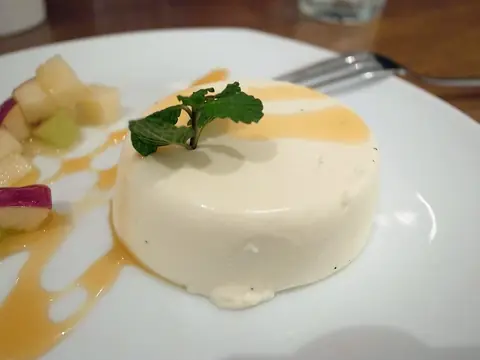
Panna cotta ("cooked cream") is a chilled Italian dessert of sweetened cream, often flavoured with vanilla, set with gelatin into a soft, wobbly pudding. It's usually turned out onto a plate and served with a berry coulis, caramel or chocolate sauce. It's associated with Piedmont and found on dessert menus all over Italy.
- At a glance
- Panna cotta
- Sweetened cream set with gelatin, served cold with a fruit, caramel or chocolate sauce.
- Pronunciation
- Say it like PAHN-nah KOT-tah · IPA /ˈpanna ˈkɔtta/
- Also written as
- pannacotta, panna cotta ai frutti di bosco, panna cotta al caramello, panna cotta al cioccolato, panna cotta al caffè
What’s in it
Core ingredients
- cream
- sugar
- gelatin (usually sheets called colla di pesce)
- vanilla
Often added
- milk
- berry coulis (frutti di bosco)
- caramel sauce
- chocolate sauce
- coffee
- rum or Marsala
- chopped nuts or crumbled biscuits on top
Allergens
| Allergen | How likely |
|---|---|
| Dairy | Typically contains |
| Tree nuts | Sometimes contains |
| Gluten | Sometimes contains |
| Eggs | Rarely contains |
| Peanuts | Rarely contains |
| Shellfish | Rarely contains |
| Fish | Rarely contains |
| Soy | Rarely contains |
| Sesame | Rarely contains |
| Diet | Suitable? |
|---|---|
| Vegetarian | Depends — Usually set with animal gelatin, often from pork; only versions made with agar or another plant setting agent are vegetarian. |
| Vegan | No |
| Pescatarian | Depends — Usually set with animal gelatin, often from pork, unless the kitchen uses agar. |
| Halal | Depends — The gelatin is usually pork- or beef-derived and not halal-certified, and some recipes add rum or Marsala. |
| Kosher | Depends — Gelatin and dairy need kosher certification, which ordinary restaurant panna cotta doesn't have. |
| Gluten-free | Usually |
Allergen and calorie details are AI estimates based on the menu and typical recipes. They can be incomplete — if you have a serious allergy, always check with the staff.
Cream, sugar and gelatin
Despite the name, the cream isn't really cooked. It's warmed just enough to dissolve the sugar, often with a vanilla pod, and then soaked gelatin is stirred in. The mixture is poured into small moulds and chilled for several hours until set. Turned out onto a plate, a good panna cotta holds its shape but trembles when the plate moves, and melts in the mouth.
The classic recipe has no eggs, which sets it apart from most custards. Some Italian recipes call for colla di pesce, literally "fish glue". Today the name usually just means sheet gelatin, which is generally made from pork or beef, not fish.
Piedmont's cream pudding
Panna cotta is considered a traditional dessert of Piedmont, in north-west Italy, a dairy region famous for its cream. Even so, the name doesn't appear in Italian cookbooks until the 1960s, and its earlier history is unclear. Piedmont includes it on its official list of traditional food products, in a version with caramel, rum and Marsala. It became fashionable abroad, notably in the United States, in the 1990s.
Typical price
Median price 7 EUR
Typical range 6–9 EUR.
Median of 26 menus, 2025-04 – 2026-05. Basis: French-, German- and Italian-language menus priced in euros, scanned with MenuGuide.
How to order it
| Phrase | Meaning |
|---|---|
| Una panna cotta ai frutti di bosco, per favore. | A panna cotta with berries, please. |
| Che tipo di gelatina usate? | What kind of gelatin do you use? |
| Ci sono frutta secca o biscotti sopra? | Are there nuts or biscuits on top? |
Not to be confused with
- Crème caramel / crème brûlée — Baked custards thickened with eggs, not gelatin.
- Tiramisu — Layers of coffee-soaked ladyfingers and mascarpone cream, with egg and gluten.
- Budino — An Italian pudding usually thickened with starch or eggs, often chocolate or vanilla.
Frequently asked questions
Is panna cotta vegetarian?
Usually not, strictly speaking, because it's set with animal gelatin, typically from pork or beef. Some restaurants and pastry shops use agar-agar or another plant-based setting agent, which makes it vegetarian. If this matters to you, ask "Che tipo di gelatina usate?" (What kind of gelatin do you use?) before ordering.
Does panna cotta have eggs?
The classic recipe doesn't: panna cotta is set with gelatin, not eggs. That's the main difference from crème caramel, crème brûlée and other custards. Some modern or restaurant versions add egg, and toppings or biscuits served with it can contain egg, so if you have an egg allergy it's still worth asking the staff.
Is panna cotta gluten free?
Usually yes. Cream, sugar, gelatin and vanilla don't contain gluten, and most fruit, caramel and chocolate sauces don't either. Gluten can come from toppings such as crumbled biscuits, amaretti or granola-style crumbles. If you have coeliac disease, ask what goes on top and how it's prepared.
How do you pronounce panna cotta?
Say PAHN-nah KOT-tah, with the stress on the first syllable of each word and both double consonants held slightly longer: in IPA, [ˈpanna ˈkɔtta]. The o in cotta is open, like the o in "cot". Panna means cream and cotta means cooked, though the cream is only warmed.