
Dish guides
What is a pastel de nata?
A pastel de nata (plural pastéis de nata) is a Portuguese custard tart: a crisp, flaky puff-pastry cup filled with a rich egg-yolk custard and baked very hot until the top blisters and darkens in spots. It's eaten at any time of day, usually from a pastelaria (pastry shop) counter, often with a coffee and a dusting of cinnamon.
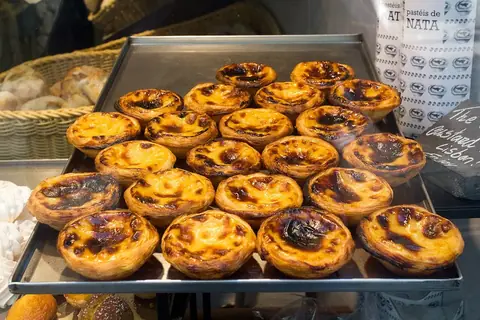
- At a glance
- Pastel de nata
- Portuguese custard tart in crisp puff pastry with a blistered top.
- Pronunciation
- Say it like push-TEL duh NAH-tuh · IPA /pɐʃˈtɛl dɨ ˈnatɐ/
- Also written as
- pastéis de nata, pasteis de nata, pastel de Belém, pastéis de Belém, Portuguese custard tart, nata
What’s in it
Core ingredients
- puff pastry (massa folhada)
- egg yolks
- milk and/or cream
- sugar
- wheat flour
Often added
- lemon peel
- cinnamon stick in the custard
- ground cinnamon and icing sugar on top
Allergens
| Allergen | How likely |
|---|---|
| Eggs | Typically contains |
| Dairy | Typically contains |
| Gluten | Typically contains |
| Tree nuts | Rarely contains |
| Peanuts | Rarely contains |
| Soy | Rarely contains |
| Sesame | Rarely contains |
| Shellfish | Rarely contains |
| Fish | Rarely contains |
| Diet | Suitable? |
|---|---|
| Vegetarian | Usually — No meat or gelatin in the classic recipe; the fat in the pastry varies by bakery, so ask if you avoid animal fats. |
| Vegan | No |
| Pescatarian | Usually |
| Halal | Depends — There's no meat or alcohol in the classic recipe, but the fat in the pastry varies by bakery; ask if it matters to you. |
| Kosher | Depends — The ingredients are dairy and usually kosher-compatible, but Portuguese bakeries are rarely kosher-certified. |
| Gluten-free | No |
Allergen and calorie details are AI estimates based on the menu and typical recipes. They can be incomplete — if you have a serious allergy, always check with the staff.
What's in it
The case is thin puff pastry, rolled into a log, sliced and pressed into small tins so the layers spiral up the sides and bake shatteringly crisp. The filling is a custard of egg yolks, milk or cream, sugar and a little flour, often perfumed with lemon peel and a cinnamon stick. Despite the name (nata means cream), many recipes rely mostly on milk. The tarts bake in a very hot oven, which gives the custard its dark, blistered spots.
They're best warm, within a few hours of baking. Shakers of cinnamon and sometimes icing sugar sit on the counter so you can add your own.
Belém and the monks
The tart is linked to the Jerónimos Monastery in Belém, Lisbon. Monasteries and convents used egg whites in large quantities, for example to starch clothes, and turned the leftover yolks into sweets. After religious orders were dissolved in the 1830s, the recipe passed to a nearby business that opened the Fábrica de Pastéis de Belém in 1837. It still bakes its own version, sold under the trademarked name pastéis de Belém. Elsewhere, the generic name is pastel de nata.
Where and when to eat one
Every pastelaria and café in Portugal sells them, from breakfast to late afternoon, usually for eating standing at the counter with a bica (espresso, as it's called in Lisbon) or a galão (milky coffee in a glass). Restaurants sometimes list them under sobremesas (desserts). Lisbon has several specialist bakeries famous for them. To read the rest of the menu, see the Portugal menu guide.
How to order it
| Phrase | Meaning |
|---|---|
| Queria um pastel de nata e uma bica, por favor. | I'd like a custard tart and an espresso, please. |
| Dois pastéis de nata para levar, por favor. | Two custard tarts to take away, please. |
| Tem frutos secos? | Does it contain any nuts? |
Not to be confused with
- Pastel de Belém — The trademarked tart of one historic bakery in Lisbon's Belém district, made to its own secret recipe since 1837.
- Macanese egg tart — The version popularised in Macau and from there across East Asia, adapted from the Portuguese tart.
- Pastel de bacalhau — A savoury fried salt-cod croquette: in Portuguese, pastel can mean almost any pastry or fritter.
Frequently asked questions
What's the difference between pastel de nata and pastel de Belém?
They're the same kind of custard tart. Pastéis de Belém are the ones made by the Fábrica de Pastéis de Belém in Lisbon since 1837, following its own secret recipe, and the name is a trademark of that bakery. Every other bakery sells pastéis de nata. Fans argue about which is better; trying both is part of a Lisbon visit.
Do pastéis de nata contain eggs?
Yes. The custard is made with egg yolks, so eggs are a core ingredient, along with milk or cream, sugar and wheat flour in both the filling and the pastry. Standard pastéis de nata aren't suitable if you're allergic to eggs, dairy or gluten, so check with the bakery before trying one.
Are pastéis de nata eaten warm or cold?
Both, but they're at their best warm and fresh, when the pastry is crisp and the custard still slightly soft. Many bakeries bake batches throughout the day, so ask for one from the latest tray. They're also eaten at room temperature later in the day. Cinnamon and icing sugar are optional toppings you add yourself.
How do you pronounce pastel de nata?
Say push-TEL duh NAH-tuh: in IPA, [pɐʃˈtɛl dɨ ˈnatɐ]. In European Portuguese, the s before t sounds like "sh", and the final a is a soft, unstressed "uh". The plural pastéis de nata is push-TAYSH duh NAH-tuh.

.jpg)