Dish guides
What is gyros?
Γύρος · Gýros
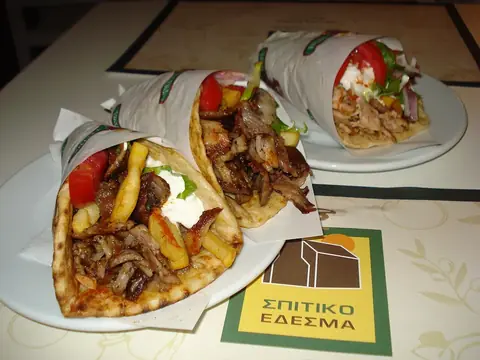
Gyros is thin slices of seasoned meat shaved from a tall, slowly turning vertical spit. In Greece it's usually pork, sometimes chicken. It comes wrapped in a grilled pita with tomato, onion, tzatziki and a few fries, or as a plate (merída) with pita on the side. It's sold at grill shops (psistariés) and souvlaki bars more than at sit-down tavernas.
- At a glance
- Gyros
- Greek meat sliced from a vertical rotisserie, served in pita or as a plate.
- Pronunciation
- Say it like YEE-ros · IPA /ˈʝiros/
- Also written as
- gyro, yiros, pita gyros (πίτα γύρο), pork gyros (γύρος χοιρινός), chicken gyros (γύρος κοτόπουλο), gyros plate
What’s in it
Core ingredients
- pork (or chicken) slices, marinated and stacked on a vertical spit
- pita bread
- tomato
- red onion
- tzatziki
- fried potatoes
Often added
- paprika and oregano in the seasoning
- yellow mustard sauce (often with mayonnaise) with chicken
- lettuce
- lamb or beef (more common outside Greece)
Allergens
| Allergen | How likely |
|---|---|
| Gluten | Typically contains |
| Dairy | Typically contains |
| Mustard | Sometimes contains |
| Eggs | Sometimes contains |
| Soy | Rarely contains |
| Celery | Rarely contains |
| Peanuts | Rarely contains |
| Tree nuts | Rarely contains |
| Shellfish | Rarely contains |
| Fish | Rarely contains |
| Sesame | Rarely contains |
| Diet | Suitable? |
|---|---|
| Vegetarian | No |
| Vegan | No |
| Pescatarian | No |
| Halal | Depends — Pork is the default in Greece. Chicken gyros contains no pork, but it's rarely halal-certified and is often cut next to the pork spit. |
| Kosher | No |
| Gluten-free | Depends — Order it as a plate without pita. Hand-stacked slices are usually just meat and spices, but some spits, especially chicken, are bulked out with breadcrumbs or flour, so ask. |
Allergen and calorie details are AI estimates based on the menu and typical recipes. They can be incomplete — if you have a serious allergy, always check with the staff.
What gyros is
Gýros means "turn", after the vertical spit that rotates in front of a heat source. Thin slices of pork, usually from the shoulder or neck, are marinated with oil, salt, pepper and spices such as paprika and oregano, then stacked into a tall cone. As the outside crisps, it's shaved off in thin strips. Chicken gyros is made the same way, and some shops serve it with a yellow mustard sauce, often made with mayonnaise, instead of tzatziki.
In Greece the classic pita gyros is a thick, grilled pita folded around the meat, tomato, raw onion, tzatziki and a handful of fries. A merída (plate) brings the same ingredients side by side, with the pita cut into triangles.
Where gyros comes from
Roasting stacked meat on a vertical spit was developed in the Ottoman Empire in the 19th century, the origin of the Turkish döner kebab. Greeks from Asia Minor brought the technique to Greece in the 1920s, and after the Second World War it spread through Athens. The Greek name replaced the earlier word donér. The Greek version settled on pork and tzatziki, which sets it apart from döner and from Arab shawarma.
Typical price
Median price 10 EUR
Typical range 4.5–17.5 EUR.
Median of 25 menus, 2025-05 – 2026-04. Basis: Greek-, German-, English- and Spanish-language menus priced in euros, scanned with MenuGuide; pita wraps and full plates.
How to order it
| Phrase | Romanization | Meaning |
|---|---|---|
| Μία πίτα γύρο χοιρινό, παρακαλώ. | Mía píta gýro choirinó, parakaló. | One pork gyros in pita, please. |
| Μία μερίδα γύρο κοτόπουλο, παρακαλώ. | Mía merída gýro kotópoulo, parakaló. | A chicken gyros plate, please. |
| Χωρίς τζατζίκι και κρεμμύδι, παρακαλώ. | Chorís tzatzíki kai kremmýdi, parakaló. | Without tzatziki and onion, please. |
Not to be confused with
- Souvlaki — Cubes of meat grilled on a skewer instead of slices shaved from a rotating spit.
- Döner kebab — The Turkish dish gyros descends from; usually beef, lamb, veal or chicken, with different sauces and bread.
- Tacos al pastor — Mexican cousin: pork marinated in chilli and achiote, shaved from a spit onto corn tortillas.
Frequently asked questions
What's the difference between gyros and souvlaki?
Gyros is meat sliced off a large rotating vertical spit; souvlaki is cubes of meat grilled on small skewers. Both are usually pork in Greece, and both come in pita with tomato, onion and tzatziki or as a plate. In Athens, "souvlaki" is also slang for any pita wrap, so a "souvlaki" order there may arrive as gyros.
Is gyros pork or lamb?
In Greece, gyros is usually pork, with chicken as the common alternative. Lamb and beef gyros are rare in Greece but more common in Greek restaurants abroad, especially in the US. If you don't eat pork, ask for kotópoulo (chicken) and check whether the chicken is cooked on a separate spit.
Do Greeks put fries in gyros?
Yes, very often. A standard pita gyros in Greece has a few fried potatoes tucked inside along with tomato, onion and tzatziki. If you'd rather have them on the side, or not at all, ask "χωρίς πατάτες" (chorís patátes, without fries). On a plate, the fries come next to the meat.
How do you pronounce gyros?
In Greek it's YEE-ros, with a soft y sound at the start: in IPA, [ˈʝiros]. It isn't pronounced like the English "gyroscope" or with a hard g. When ordering, Greeks say "mía píta gýro" (one gyros in pita), dropping the final s.