Dish guides
What is steak tartare?
Tartare de bœuf
Steak tartare (tartare de bœuf) is raw beef, finely chopped or minced, seasoned with shallots, capers, gherkins, parsley and mustard and usually served with a raw egg yolk on top. It is not cooked at all. In France it's a brasserie main course, nearly always with fries and a green salad.
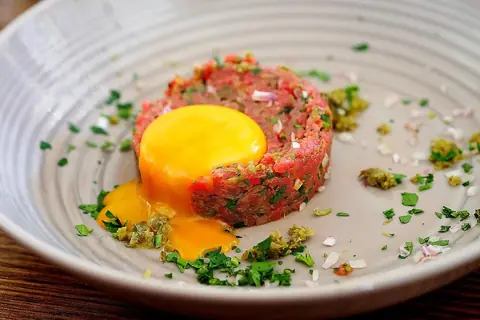
- At a glance
- Steak tartare
- Raw chopped beef with mustard, capers, shallots and a raw egg yolk.
- Pronunciation
- Say it like stek tar-TAR · IPA /stɛk taʁtaʁ/
- Also written as
- tartare de bœuf, tartare de boeuf, beef tartare, tartare, tartare de bœuf au couteau, tartare de bœuf traditionnel, tartare di manzo, beef tartar
What’s in it
Core ingredients
- raw lean beef, chopped by knife or minced
- raw egg yolk
- shallot or onion
- capers
- cornichons (small gherkins)
- parsley
- Dijon mustard
Often added
- Worcestershire sauce
- Tabasco or other hot sauce
- ketchup
- olive oil
- anchovy
- fries and green salad on the side
Allergens
| Allergen | How likely |
|---|---|
| Eggs | Typically contains |
| Mustard | Typically contains |
| Fish | Often contains |
| Sulphites | Often contains |
| Gluten | Sometimes contains |
| Celery | Rarely contains |
| Dairy | Rarely contains |
| Soy | Rarely contains |
| Peanuts | Rarely contains |
| Tree nuts | Rarely contains |
| Shellfish | Rarely contains |
| Sesame | Rarely contains |
| Diet | Suitable? |
|---|---|
| Vegetarian | No |
| Vegan | No |
| Pescatarian | No |
| Halal | Depends — It's beef with no pork or alcohol in the classic recipe, but the meat would need to be halal-slaughtered, which is uncommon in French brasseries; ask. |
| Kosher | Depends — Beef can be kosher only if it comes from a kosher supplier and kitchen, which ordinary French brasseries are not. |
| Gluten-free | Depends — The meat and classic seasonings have no gluten, but some Worcestershire sauces use barley malt vinegar, and fries may share a fryer with breaded food. |
Allergen and calorie details are AI estimates based on the menu and typical recipes. They can be incomplete — if you have a serious allergy, always check with the staff.
What's in it
Lean beef, usually from the rump or fillet, is chopped finely with a knife (au couteau, the mark of a careful kitchen) or put through a mincer. It's mixed with chopped shallot, capers, cornichons and parsley, bound with Dijon mustard (which usually contains sulphites as a preservative) and seasoned with salt, pepper and often Worcestershire sauce, which is made with anchovies, and a few drops of Tabasco. A raw egg yolk usually sits on top, sometimes in half its shell.
Some brasseries mix it in the kitchen (préparé); others bring the meat with the yolk and seasonings around it so you mix it yourself. Because the beef and egg are raw, people who are pregnant or have weakened immunity are usually advised to avoid it.
Where the name comes from
The name is often linked to the Tatars, but the old story of Central Asian horsemen softening raw meat under their saddles is a legend, not the dish's origin. Raw minced beef was already served in restaurants in the late 19th century, and early 20th-century French menus called raw beef with an egg yolk steak à l'américaine. Escoffier described steak à la tartare as the same dish without the yolk, served with tartar sauce, which is probably where the name comes from. The French brasserie version, with mustard, capers and fries, became a classic in the 20th century. Today tartare on a menu can also mean raw fish, so check the word that follows.
Typical price
Median price 20 EUR
Typical range 15.5–25 EUR.
Median of 77 menus, 2025-04 – 2026-05. Basis: French-language menus scanned with MenuGuide.
How to order it
| Phrase | Meaning |
|---|---|
| Je vais prendre le tartare de bœuf, s'il vous plaît. | I'll have the steak tartare, please. |
| Je peux l'avoir aller-retour ? | Can I have it seared on both sides? |
| Est-ce qu'il y a du jaune d'œuf cru et de la moutarde ? | Is there raw egg yolk and mustard in it? |
Not to be confused with
- Carpaccio — Also raw beef, but sliced paper-thin and dressed with oil, lemon or sauce, not chopped.
- Tartare aller-retour — The same tartare quickly seared on both sides, so the outside is browned and the middle stays raw.
- Tartare de saumon / de thon — Raw salmon or tuna cut the same way: a fish dish, not beef.
Frequently asked questions
Is steak tartare raw?
Yes. Steak tartare is raw beef, chopped or minced, usually served with a raw egg yolk, and none of it is cooked. That's the whole point of the dish, so don't expect the kitchen to cook it through. If you'd like a little heat, ask for it aller-retour, which means it's seared quickly on both sides.
Can you get sick from steak tartare?
It can happen. Tartare is a mainstream dish in France, and good brasseries make it to order from very fresh, high-quality beef, but raw meat and raw egg carry a higher risk of food poisoning than cooked food. Health advice usually tells pregnant people, young children, older people and anyone with weakened immunity to avoid it.
What does steak tartare taste like?
It tastes like very tender, clean beef, sharpened by mustard, capers, gherkins and shallot, with the egg yolk making it richer and silkier. The texture is soft rather than chewy. A good tartare is well seasoned and cold, and the hot fries served alongside make a pleasant contrast.
How do you pronounce steak tartare?
In French, say stek tar-TAR: in IPA, [stɛk taʁtaʁ]. Both syllables of tartare are even, with a light stress on the last one, and the r is the French throaty r. On French menus you'll more often see tartare de bœuf, pronounced tar-TAR duh BUHF.