Dish guides
What is magret de canard?
Magret de canard is a duck breast from the fattened ducks raised for foie gras, cooked like a steak: the thick layer of fat is crisped in the pan and the meat is served pink, sliced, usually with a sauce. It's one of the most common main courses (plats) in French bistros, especially in the south-west.
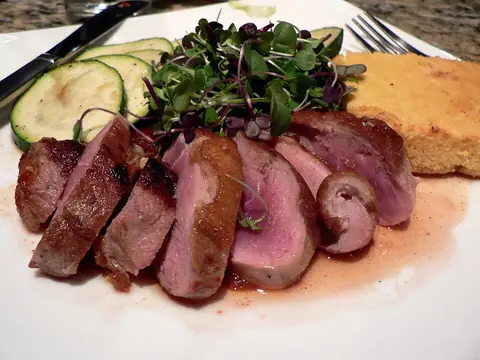
- At a glance
- Magret de canard
- Seared breast of a fattened duck, served pink like a steak.
- Pronunciation
- Say it like mah-GREH duh kah-NAR · IPA /maɡʁɛ d(ə) kanaʁ/
- Also written as
- magret, magret de canard entier, magret de canard rôti, magret de canard au poivre vert, magret de pato, duck breast
What’s in it
Core ingredients
- duck breast (magret) with its fat layer
- salt and pepper
Often added
- green peppercorn, honey (sometimes with mustard), orange, cherry or berry sauce
- red wine, port or balsamic reduction
- pommes sarladaises (potatoes fried in duck fat with garlic and parsley)
- gratin dauphinois
- butter or cream in the sauce
Allergens
| Allergen | How likely |
|---|---|
| Dairy | Often contains |
| Sulphites | Sometimes contains |
| Gluten | Sometimes contains |
| Celery | Sometimes contains |
| Mustard | Sometimes contains |
| Eggs | Rarely contains |
| Peanuts | Rarely contains |
| Tree nuts | Rarely contains |
| Shellfish | Rarely contains |
| Fish | Rarely contains |
| Soy | Rarely contains |
| Sesame | Rarely contains |
| Diet | Suitable? |
|---|---|
| Vegetarian | No |
| Vegan | No |
| Pescatarian | No |
| Halal | Depends — Duck isn't pork, but the bird would need halal slaughter and many sauces are made with wine or port; ask. |
| Kosher | Depends — Duck can be kosher, but French restaurant kitchens are not kosher, and sauces are often finished with butter or cream. |
| Gluten-free | Depends — The meat has no gluten, but some sauces are thickened with flour or made with stock that may contain it; ask about the sauce. |
Allergen and calorie details are AI estimates based on the menu and typical recipes. They can be incomplete — if you have a serious allergy, always check with the staff.
What makes it a magret
Strictly, magret is the breast of a duck (or goose) fattened for foie gras, usually a large Moulard duck. That's why it's thick and meaty, with a layer of fat on one side. Cooks score the fat, cook it skin-side down until most of it renders out and the skin turns crisp, then briefly sear the meat side. It rests, then comes sliced across the grain, pink in the middle.
Classic sauces include green peppercorn (au poivre vert), honey and vinegar, orange, cherry or red berries, or a red wine or port reduction. In the south-west it often comes with pommes sarladaises, potato slices fried in duck fat with garlic and parsley.
A newer classic than it seems
Ducks in south-west France were traditionally preserved as confit or used in soups, not cooked as steaks. The idea of grilling the fattened duck's breast like beef is usually credited to the Gascon chef André Daguin in Auch, in the Gers, around 1960. It spread quickly and is now a standard of French bistro cooking far beyond the region. Magret comes from the Occitan (Gascon) word for "lean".
Typical price
Median price 24 EUR
Typical range 18–27.5 EUR.
Median of 26 menus, 2025-04 – 2026-05. Basis: French-language menus scanned with MenuGuide.
How to order it
| Phrase | Meaning |
|---|---|
| Je vais prendre le magret de canard, s'il vous plaît. | I'll have the duck breast, please. |
| À point, s'il vous plaît. | Medium, please. |
| Est-ce que la sauce contient de la crème ou du beurre ? | Is there cream or butter in the sauce? |
Not to be confused with
- Confit de canard — Duck leg salted and slow-cooked in its own fat until tender, served crisp and well done.
- Foie gras — The fattened liver of the same ducks, served as a terrine or seared slice.
- Aiguillette de canard — The thin, lean strip under the breast, cooked quickly and served as small pieces.
Frequently asked questions
How is magret de canard cooked?
It's cooked like a steak. The fat side goes into the pan first so the fat renders and the skin crisps, then the meat side is seared briefly. After resting, it's sliced and served pink in the middle. Restaurants often serve it rosé or saignant unless you ask; say à point for medium or bien cuit for well done.
Should magret de canard be pink?
In France, yes: that's how it's traditionally served, much like a beef steak cooked medium-rare. Food-safety agencies such as the USDA advise cooking all poultry, duck included, to 74 °C (165 °F), which a pink magret usually doesn't reach. If you're pregnant, have weakened immunity or simply prefer it cooked through, ask for it bien cuit when you order.
What's the difference between magret and confit de canard?
Magret is the breast, cooked quickly like a steak and served pink. Confit de canard is usually the leg, salted, slow-cooked in duck fat for hours and then crisped, so it's well done, very tender and saltier. Both come from the fattened ducks of south-west France and appear on the same menus.
How do you pronounce magret de canard?
Say mah-GREH duh kah-NAR: in IPA, [maɡʁɛ d(ə) kanaʁ]. The t at the end of magret and the d at the end of canard are silent. The r sounds are the throaty French r, and in fast speech the de shrinks to a quick "d".