Dish guides
What is burrata?
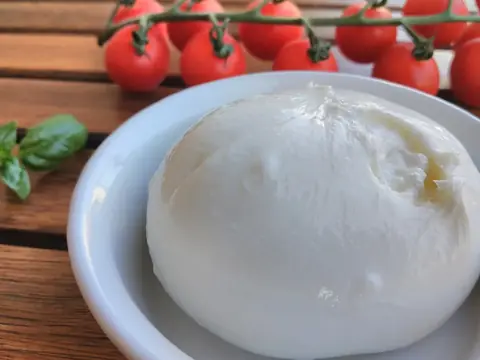
Burrata is a fresh cheese from Puglia: a thin pouch of mozzarella filled with stracciatella, a soft mix of shredded curd and cream that spills out when you cut it. On menus it's usually served whole as an antipasto or salad, with tomatoes, olive oil and bread.
- At a glance
- Burrata
- Fresh mozzarella pouch filled with creamy stracciatella, from Puglia.
- Pronunciation
- Say it like boor-RAH-tah · IPA /burˈraːta/
- Also written as
- burrata pugliese, burrata di Andria, burrata di bufala, burrata salad, ensalada de burrata
What’s in it
Core ingredients
- cow's milk (occasionally buffalo milk)
- rennet
- cream
- salt
Often added
- tomatoes or cherry tomatoes
- extra virgin olive oil
- basil or rocket
- prosciutto crudo or other cured ham
- pesto or pistachio pesto
- anchovies or bottarga
- bread or crostini
Allergens
| Allergen | How likely |
|---|---|
| Dairy | Typically contains |
| Gluten | Sometimes contains |
| Tree nuts | Sometimes contains |
| Fish | Sometimes contains |
| Sulphites | Sometimes contains |
| Eggs | Rarely contains |
| Peanuts | Rarely contains |
| Shellfish | Rarely contains |
| Soy | Rarely contains |
| Sesame | Rarely contains |
| Diet | Suitable? |
|---|---|
| Vegetarian | Usually — The cheese has no meat, but it's made with rennet, which can be animal-derived; some plates also add cured ham. |
| Vegan | No |
| Pescatarian | Usually |
| Halal | Depends — No meat in the cheese itself, but rennet may be animal-derived and it's often served with pork prosciutto. |
| Kosher | Depends — Kosher rules need certified cheese, which ordinary Italian restaurants don't use. |
| Gluten-free | Usually |
Allergen and calorie details are AI estimates based on the menu and typical recipes. They can be incomplete — if you have a serious allergy, always check with the staff.
Cheese with a creamy heart
Burrata starts like mozzarella. Warm milk is curdled with rennet, and the curd is stretched in hot water into a smooth, elastic cheese. While it's still hot, the cheesemaker shapes a thin pouch and fills it with stracciatella: shreds of mozzarella soaked in fresh cream. The top is pinched closed into a little knot. When you cut it, the outside is soft and springy and the inside flows out like thick cream.
Burrata is best within a day or two of being made, which is why it tastes best close to where it's produced. Outside Italy it's often flown in or made locally, and quality varies a lot.
From Andria, in Puglia
Burrata comes from the Murgia area of Puglia (Apulia), in the heel of Italy, and is especially linked to the town of Andria. Accounts of its invention range from around 1900 to the 1950s, and it's said to have begun as a way to use up the scraps of mozzarella production. Since 2016, burrata di Andria has been a protected geographical indication (PGI) in the EU. In Puglia it's sold fresh in dairies every day and often eaten simply with bread.
Typical price
Median price 12 EUR
Typical range 9–18 EUR.
Median of 26 menus, 2025-04 – 2026-04. Basis: Italian-language menus scanned with MenuGuide.
How to order it
| Phrase | Meaning |
|---|---|
| Prendiamo una burrata da dividere, per favore. | We'll have a burrata to share, please. |
| Con cosa viene servita? | What is it served with? |
| Il pesto contiene frutta secca? | Does the pesto contain nuts? |
Not to be confused with
- Mozzarella — Solid all the way through; burrata is a mozzarella shell with a creamy filling.
- Stracciatella (cheese) — The creamy filling of burrata on its own, served by the spoonful; not the gelato flavour.
- Pizza margherita — Uses ordinary mozzarella; some pizzerias add burrata on top after baking.
Frequently asked questions
What is the difference between burrata and mozzarella?
Mozzarella is solid all the way through, while burrata is a mozzarella shell filled with stracciatella, a soft mix of shredded curd and cream. Burrata is richer, softer and more perishable. Both are fresh, unaged cheeses made from cow's or buffalo milk, and both should be eaten within a few days.
Is burrata vegetarian?
It contains no meat or fish, so many vegetarians eat it, but it's made with rennet, which is often of animal origin. Producers rarely state which rennet they use on restaurant menus. Check the toppings too: burrata is often served with prosciutto, anchovies or bottarga (cured fish roe). Ask "Con cosa viene servita?" if the menu doesn't say.
Is burrata pasteurised and OK during pregnancy?
Many burratas are made from pasteurised milk, but some artisan ones are not, and restaurants don't always know. Health authorities generally advise pregnant women to avoid soft cheeses made from unpasteurised milk. If this applies to you, ask whether the cheese is made with pasteurised milk (latte pastorizzato) or skip it.
How do you pronounce burrata?
Say boor-RAH-tah, with a rolled double r and the stress on the middle syllable: in IPA, [burˈraːta]. The name comes from burro, the Italian word for butter, a nod to its rich, creamy filling. On menus it's sometimes paired with the place it comes from, as in burrata pugliese.