Dish guides
What is pesto alla genovese?
Pesto alla genovese is a raw green sauce from Genoa made by pounding fresh basil with pine nuts, garlic, parmigiano, pecorino and olive oil. It's typically served on trofie or trenette pasta, and it contains both nuts and cheese. On menus it appears as "al pesto" or "al pesto genovese".
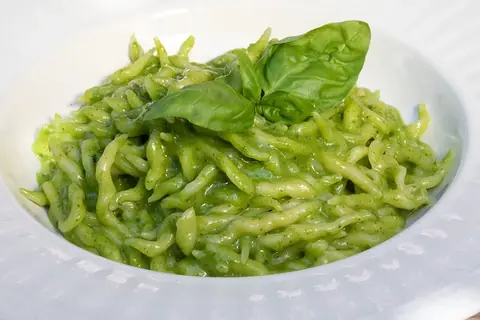
- At a glance
- Pesto alla genovese
- Genoa's pounded sauce of basil, pine nuts, garlic, cheese and olive oil.
- Pronunciation
- Say it like PES-toh AHL-lah jeh-noh-VEH-zeh · IPA /ˈpesto alla dʒenoˈveːze/
- Also written as
- pesto, pesto genovese, trofie al pesto, trenette al pesto, gnocchi al pesto, spaghetti al pesto, al pesto
What’s in it
Core ingredients
- fresh basil (ideally Genovese basil)
- pine nuts
- garlic
- parmigiano reggiano
- pecorino (often pecorino sardo)
- extra virgin olive oil
- coarse salt
Often added
- potatoes and green beans boiled with the pasta (Liguria)
- walnuts or cashews instead of pine nuts (cheaper or ready-made pesto)
- grana padano instead of parmigiano
- cream (some versions outside Italy)
Allergens
| Allergen | How likely |
|---|---|
| Tree nuts | Typically contains |
| Dairy | Typically contains |
| Gluten | Typically contains |
| Eggs | Sometimes contains |
| Peanuts | Rarely contains |
| Shellfish | Rarely contains |
| Fish | Rarely contains |
| Soy | Rarely contains |
| Sesame | Rarely contains |
| Diet | Suitable? |
|---|---|
| Vegetarian | Depends — There's no meat, but parmigiano reggiano and traditional pecorino are made with animal rennet, which strict vegetarians avoid. |
| Vegan | No |
| Pescatarian | Usually |
| Halal | Depends — No meat or alcohol; some halal diners avoid cheese made with animal rennet. |
| Kosher | Depends — Only with kosher-certified cheese, which ordinary Italian restaurants don't use. |
| Gluten-free | Depends — The sauce is normally gluten-free; the dish is only gluten-free with gluten-free pasta or gnocchi. |
Allergen and calorie details are AI estimates based on the menu and typical recipes. They can be incomplete — if you have a serious allergy, always check with the staff.
What's in a Genoese pesto
The name comes from pestare, to pound: traditionally the ingredients are crushed in a marble mortar with a wooden pestle. Young basil leaves are ground with garlic and coarse salt, then pine nuts, grated parmigiano and pecorino, and finally olive oil until the sauce is creamy and bright green. Pesto is never cooked. It's stirred into hot pasta off the heat, often loosened with a spoonful of cooking water.
Ready-made and restaurant pestos vary more than you'd expect. Outside Liguria, and in many jars, pine nuts are partly or fully replaced with cashews or walnuts. Some versions abroad even use peanuts. Cream is sometimes added outside Italy.
Other sauces called pesto or genovese
"Pesto" alone usually means the Genoese basil sauce, but menus also list pesto rosso (sun-dried tomato), pesto di pistacchio (pistachio) and pesto alla trapanese from Sicily, made with tomatoes and almonds. They contain different nuts, which matters for allergies. And in Naples, pasta alla genovese has nothing to do with Genoa's pesto: it's a rich sauce of onions slowly cooked with beef.
Typical price
Median price 12 EUR
Typical range 10–16 EUR.
Median of 29 menus, 2025-04 – 2026-04. Basis: Italian-language menus scanned with MenuGuide; pasta and gnocchi dishes with pesto.
How to order it
| Phrase | Meaning |
|---|---|
| Vorrei le trofie al pesto, per favore. | I'd like the trofie with pesto, please. |
| Nel pesto ci sono pinoli o altra frutta a guscio? Sono allergico. | Are there pine nuts or other nuts in the pesto? I'm allergic. |
Not to be confused with
- Genovese (Naples) — In Naples, pasta alla genovese is a slow-cooked onion and beef sauce with no basil.
- Pesto rosso — Red pesto with sun-dried tomatoes, often made with almonds or cashews.
- Pesto alla trapanese — Sicilian pesto of tomato, almonds, basil and garlic.
Frequently asked questions
Does pesto have nuts in it?
Yes, typically. Classic pesto alla genovese is made with pine nuts, and many restaurant and ready-made pestos use cashews or walnuts instead, sometimes mixed. Pine nuts are botanically seeds and aren't on the EU's list of allergenic nuts, but pine nut allergy exists and advice for people with tree-nut allergies varies. If you have a nut allergy, ask which nuts are in the pesto, or skip it.
Is pesto vegetarian?
It contains no meat or fish, so most vegetarians eat it. Strict vegetarians should know that the traditional cheeses, parmigiano reggiano and pecorino, are made with animal rennet. Some restaurants and supermarket pestos use vegetarian hard cheese instead. It isn't vegan, because cheese is a core ingredient, though dairy-free pestos exist abroad.
Is pesto gluten free?
The sauce normally is: basil, nuts, garlic, cheese and olive oil don't contain gluten. The dish isn't, because pesto is served on wheat pasta, potato gnocchi made with flour or bread. Ask for gluten-free pasta if the restaurant offers it, and check ready-made pesto labels, which can contain other additives.
How do you pronounce pesto alla genovese?
Say PES-toh AHL-lah jeh-noh-VEH-zeh. The e in pesto is short, as in "pest", and the g in genovese is soft, like the j in jet. The s in genovese sounds like a z. In IPA it's [ˈpesto alla dʒenoˈveːze].
What's the difference between pesto and pistou?
Pistou is the Provençal cousin of pesto, made from basil, garlic and olive oil, traditionally without nuts or cheese, although some modern versions add grated cheese. It's best known stirred into soupe au pistou, a vegetable soup. Pesto alla genovese is thicker and nuttier and is mainly used to dress pasta.