Dish guides
What is ragù alla bolognese?
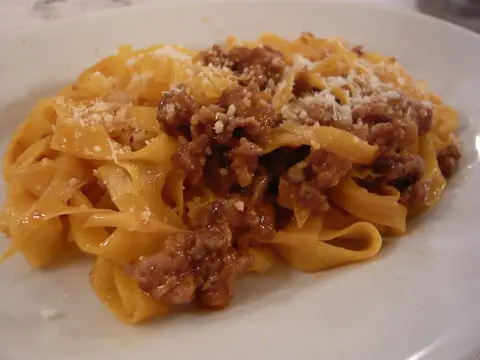
Ragù alla bolognese is a slow-cooked meat sauce from Bologna, made with minced beef and pork, a base of onion, carrot and celery, a little tomato, wine and milk. In Italy it's served on fresh egg tagliatelle (tagliatelle al ragù) or layered in lasagne, not on spaghetti.
- At a glance
- Ragù alla bolognese
- Bologna's slow-simmered meat sauce, served on fresh egg tagliatelle.
- Pronunciation
- Say it like rah-GOO AHL-lah boh-loh-NYEH-zeh · IPA /raˈɡu alla boloɲˈɲeːze/
- Also written as
- tagliatelle al ragù, tagliatelle alla bolognese, ragù bolognese, spaghetti bolognese, pasta bolognese, spaghetti bolognaise
What’s in it
Core ingredients
- minced or finely chopped beef
- pancetta or minced pork
- onion, carrot and celery
- a little tomato paste or passata
- dry wine
- milk
- broth
- tagliatelle (fresh egg pasta)
Often added
- parmigiano reggiano on top
- red instead of white wine
- a little cream
- garlic and herbs (mostly outside Italy)
Allergens
| Allergen | How likely |
|---|---|
| Gluten | Typically contains |
| Celery | Typically contains |
| Dairy | Typically contains |
| Eggs | Often contains |
| Sulphites | Often contains |
| Peanuts | Rarely contains |
| Tree nuts | Rarely contains |
| Shellfish | Rarely contains |
| Fish | Rarely contains |
| Soy | Rarely contains |
| Sesame | Rarely contains |
| Diet | Suitable? |
|---|---|
| Vegetarian | No |
| Vegan | No |
| Pescatarian | No |
| Halal | No |
| Kosher | No |
| Gluten-free | Depends — The sauce itself is usually gluten-free; the dish is only gluten-free with gluten-free pasta (pasta senza glutine), which some restaurants offer. |
Allergen and calorie details are AI estimates based on the menu and typical recipes. They can be incomplete — if you have a serious allergy, always check with the staff.
What's in a real ragù
A Bolognese ragù starts with a soffritto of finely chopped onion, carrot and celery cooked in fat, often with pancetta. Minced beef, sometimes mixed with pork, is browned, then simmered with dry wine, a little tomato and milk for two hours or more until thick and rich. The result tastes of meat rather than tomato, and it's brown-red rather than bright red.
In 1982 the Accademia Italiana della Cucina deposited a reference recipe with the Bologna Chamber of Commerce, and published an updated version in 2023. Families and restaurants still vary it, but the meat, soffritto, wine and slow cooking stay.
Spaghetti bolognese vs. tagliatelle al ragù
In Bologna, ragù is served on tagliatelle, flat ribbons of fresh egg pasta that hold the sauce, or baked in lasagne. "Spaghetti bolognese" became popular abroad, usually as a tomato-heavy mince sauce with garlic and herbs, and it's rarely seen on menus in Bologna itself. Tourist restaurants across Italy do list it, and the dish is perfectly edible, just different from the local original.
Typical price
Median price 13.5 EUR
Typical range 10–18 EUR.
Median of 23 menus, 2025-05 – 2026-05. Basis: Italian-language menus scanned with MenuGuide.
How to order it
| Phrase | Meaning |
|---|---|
| Vorrei le tagliatelle al ragù, per favore. | I'd like the tagliatelle with ragù, please. |
| C'è il sedano nel ragù? Sono allergico. | Is there celery in the ragù? I'm allergic. |
| Il ragù è di manzo o di maiale? | Is the ragù made with beef or pork? |
Not to be confused with
- Lasagne alla bolognese — The same ragù, layered with egg pasta, béchamel and parmigiano and baked.
- Ragù napoletano — Naples' Sunday sauce: large cuts of meat braised for hours in lots of tomato.
- Amatriciana — A quick tomato sauce with guanciale and pecorino, not a minced-meat ragù.
Frequently asked questions
Is spaghetti bolognese Italian?
Only partly. The sauce, ragù alla bolognese, is a genuine dish from Bologna, but there it's served with fresh egg tagliatelle, not spaghetti. Spaghetti bolognese developed abroad and is often a quicker, tomato-heavy sauce. You'll still find it on tourist menus in Italy, while local restaurants list tagliatelle al ragù.
Does bolognese sauce have milk in it?
Usually, yes. Many traditional recipes, including the Accademia Italiana della Cucina's reference version, add milk to soften the acidity of the wine and tomato. Some kitchens use a little cream instead, and parmigiano is usually grated on top. If you avoid dairy, ask whether the ragù contains milk and order it without cheese.
Is ragù alla bolognese gluten free?
The sauce usually is, because it's made from meat, vegetables, wine, tomato and milk, although some cooks thicken sauces with flour. The dish isn't gluten-free as served, since tagliatelle and lasagne are wheat pasta. Some restaurants offer gluten-free pasta. Ask about both the pasta and the sauce if you have coeliac disease.
How do you pronounce ragù alla bolognese?
Say rah-GOO AHL-lah boh-loh-NYEH-zeh. Ragù is stressed on the last syllable, which is why it has an accent. The gn in bolognese sounds like the ny in canyon. In IPA it's [raˈɡu alla boloɲˈɲeːze]. In Bologna people simply say ragù.
Does bolognese contain celery?
Typically, yes. Chopped celery is part of the soffritto, the onion, carrot and celery base that most Bolognese recipes start with, so it's cooked into the sauce and can't be picked out. If you have a celery allergy, ask before ordering any ragù, and also check soups and stews, which usually use the same base.