Dish guides
What are arancini?
Arancini / arancine
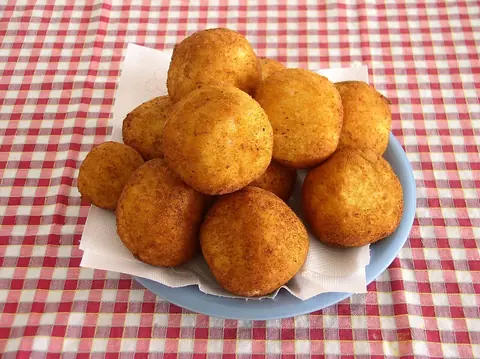
Arancini are Sicilian rice balls or cones stuffed with a filling such as meat ragù with peas and cheese, then coated in breadcrumbs and deep-fried until golden. The name means "little oranges". In Sicily they are street food sold in bars and bakeries; elsewhere they appear as an antipasto or snack.
- At a glance
- Arancini
- Sicilian fried rice balls stuffed with ragù, cheese or ham.
- Pronunciation
- Say it like ah-rahn-CHEE-nee · IPA /aranˈtʃiːni/
- Also written as
- arancino, arancina, arancine, arancini al ragù, arancini al burro
What’s in it
Core ingredients
- rice (often cooked with saffron)
- filling, e.g. meat ragù with peas and cheese
- breadcrumbs
- flour-and-water batter or beaten egg
- oil for frying
Often added
- mozzarella or caciocavallo
- ham and mozzarella or béchamel (al burro)
- spinach
- pistachio
- aubergine (alla norma)
- seafood or swordfish
Allergens
| Allergen | How likely |
|---|---|
| Gluten | Typically contains |
| Dairy | Typically contains |
| Eggs | Often contains |
| Celery | Sometimes contains |
| Tree nuts | Sometimes contains |
| Fish | Sometimes contains |
| Shellfish | Sometimes contains |
| Molluscs | Sometimes contains |
| Peanuts | Rarely contains |
| Soy | Rarely contains |
| Sesame | Rarely contains |
| Diet | Suitable? |
|---|---|
| Vegetarian | Depends — The classic fillings contain meat ragù or ham; spinach, cheese, aubergine or pistachio versions have no meat, though cheese may use animal rennet. |
| Vegan | No |
| Pescatarian | Depends — Only the meat-free or seafood versions; the classic ragù and ham fillings contain meat. |
| Halal | Depends — Ragù fillings are usually made with non-halal beef or pork, and the 'al burro' version contains ham; meat-free versions are fried in shared oil. |
| Kosher | Depends — The classic version mixes meat with cheese, and kitchens aren't kosher-supervised. |
| Gluten-free | No |
Allergen and calorie details are AI estimates based on the menu and typical recipes. They can be incomplete — if you have a serious allergy, always check with the staff.
What's inside an arancino
The rice is cooked, often with saffron for a golden colour, then cooled and shaped by hand around a filling. The most common filling is al ragù: slow-cooked meat sauce with tomato, peas and mozzarella or caciocavallo cheese. The other classic is al burro, with ham and mozzarella, sometimes with béchamel. The ball is rolled in a flour batter or beaten egg, coated in breadcrumbs and deep-fried.
Sicilian bars now sell dozens of variations: spinach, aubergine (alla norma), pistachio, mushroom, swordfish, seafood or sweet chocolate versions. Each changes the allergens, so ask "Che cosa c'è dentro?" (What's inside?) if the label isn't clear.
Arancina or arancino?
Sicilians argue about the name. In western Sicily, especially Palermo, they are usually round and called arancina (plural arancine), feminine, like the orange they resemble. In eastern Sicily, around Catania and Messina, they're arancino (plural arancini), masculine, and often cone-shaped, said to recall Mount Etna. Standard Italian outside Sicily mostly uses arancini. Either word will get you served anywhere.
Where and when to eat them
In Sicily, arancini are an everyday snack or quick lunch from a bar, rosticceria or bakery, eaten hot or warm from a paper napkin. In Palermo they're also a tradition on Saint Lucy's Day (13 December), when many people avoid bread and pasta. On mainland Italian menus and abroad they're usually smaller and served as a starter, sometimes with a dipping sauce. Find more Italian menu words in the Italy menu guide.
How to order it
| Phrase | Meaning |
|---|---|
| Un arancino al ragù, per favore. | One arancino with ragù, please. |
| Che cosa c'è dentro? | What's inside? |
| Contiene uova o frutta secca? | Does it contain eggs or nuts? |
Not to be confused with
- Supplì — The Roman cousin: an oval rice croquette with tomato-flavoured rice and a mozzarella centre.
- Croquetas — Spanish fried croquettes made with a thick béchamel, not rice.
- Crocchè di patate — Neapolitan fried potato croquettes, often with a cheese centre.
Frequently asked questions
What is the difference between arancini and supplì?
Arancini are Sicilian, usually larger, round or cone-shaped, and most often filled with meat ragù, peas and cheese. Supplì are Roman: oval croquettes of rice cooked in a tomato sauce, usually with a piece of mozzarella in the middle that stretches when you bite it. Both are breaded and deep-fried, and both contain gluten and dairy.
Are arancini vegetarian?
The classic ones aren't: arancini al ragù contain meat sauce and arancini al burro contain ham. Many Sicilian bars also sell vegetarian versions with spinach, cheese, aubergine or pistachio. Ask "Che cosa c'è dentro?" (What's inside?), and remember that cheese may be made with animal rennet and that all versions are fried in shared oil.
Are arancini gluten free?
No, not normally. Rice itself doesn't contain gluten, but arancini are coated in a wheat-flour batter and breadcrumbs, and ragù may contain flour too. Some places in Sicily make gluten-free arancini with gluten-free breadcrumbs, but they're usually fried in the same oil as regular ones, so cross-contact is likely unless a separate fryer is used.
How do you pronounce arancini?
Say ah-rahn-CHEE-nee, with the stress on CHEE: in IPA, [aranˈtʃiːni]. The c before i sounds like "ch" in "church". The singular is arancino (ah-rahn-CHEE-noh), and the Palermo form is arancina (ah-rahn-CHEE-nah). The name comes from the Sicilian word for orange.