
Dish guides
What are albóndigas?
Albóndigas are Spanish meatballs, usually made from minced pork and beef bound with bread and egg, browned and then simmered in a sauce, most often tomato or a wine-and-onion gravy. In Spain they're a classic tapa or ración in bars, and a homely main course on the lunchtime menú del día.
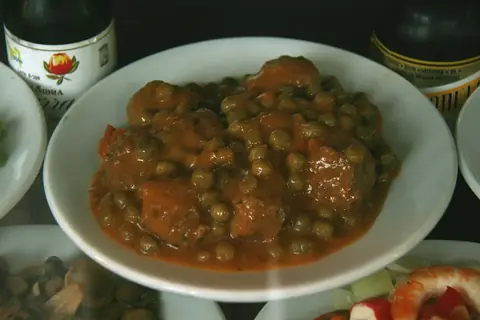
- At a glance
- Albóndigas
- Spanish meatballs simmered in tomato, wine or almond sauce.
- Pronunciation
- Say it like ahl-BOHN-dee-gahs · IPA /alˈβondiɣas/
- Also written as
- albóndigas caseras, albóndigas con tomate, albóndigas en salsa, albóndigas en salsa de tomate, albóndigas de ternera en salsa, albóndigas en salsa de almendras
What’s in it
Core ingredients
- minced pork and/or beef
- bread or breadcrumbs (often soaked in milk)
- egg
- garlic and parsley
- flour for dusting
- olive oil
Often added
- tomato sauce
- white wine and onion sauce (en salsa)
- almond sauce (en salsa de almendras)
- saffron
- peas
- fries or rice on the side
Allergens
| Allergen | How likely |
|---|---|
| Gluten | Typically contains |
| Eggs | Typically contains |
| Dairy | Often contains |
| Sulphites | Sometimes contains |
| Tree nuts | Sometimes contains |
| Celery | Sometimes contains |
| Fish | Rarely contains |
| Peanuts | Rarely contains |
| Shellfish | Rarely contains |
| Soy | Rarely contains |
| Sesame | Rarely contains |
| Diet | Suitable? |
|---|---|
| Vegetarian | No |
| Vegan | No |
| Pescatarian | No |
| Halal | Depends — Many recipes mix pork with the beef, and the sauce often contains wine. Beef-only or chicken albóndigas exist, but they're halal only if the meat is certified. |
| Kosher | No |
| Gluten-free | No |
Allergen and calorie details are AI estimates based on the menu and typical recipes. They can be incomplete — if you have a serious allergy, always check with the staff.
What's in Spanish albóndigas
The mix is usually minced pork and beef, sometimes beef alone, with bread soaked in milk, egg, garlic and chopped parsley. The balls are rolled, dusted with flour, browned in olive oil and then simmered in their sauce, which also thickens slightly from the flour.
The sauce varies by kitchen and region. The most common are:
- Con tomate or en salsa de tomate: a simple tomato sauce.
- En salsa: a light gravy of onion, garlic, white wine and stock, sometimes with saffron and peas.
- En salsa de almendras: thickened with ground almonds and fried bread, which matters if you have a nut allergy.
Menus also list albóndigas de pollo (chicken), and fish versions such as albóndigas de bonito or de choco (cuttlefish), especially near the coast.
Where the name comes from
The word albóndiga comes from the Arabic al-bunduq, "hazelnut", by extension a small round ball. Meatballs probably arrived in Spain during the centuries of Muslim rule, and the dish later travelled to Latin America. In Mexico, albóndigas are more often served in a light broth with vegetables, so the same word can mean a soup there.
Typical price
Median price 12 EUR
Typical range 7.5–20.5 EUR.
Median of 28 menus, 2025-04 – 2026-05. Basis: Spanish-language menus scanned with MenuGuide.
How to order it
| Phrase | Meaning |
|---|---|
| Una ración de albóndigas, por favor. | A portion of albóndigas, please. |
| ¿Son de cerdo o de ternera? | Are they pork or beef? |
| ¿La salsa lleva almendras? | Does the sauce contain almonds? |
Not to be confused with
- Croquetas — Breaded, fried croquettes with a creamy béchamel filling, often with ham; not minced meat in sauce.
- Polpette — Italian meatballs; similar idea, often with cheese in the mix and served in tomato sauce.
- Albóndigas de pescado / de bonito — Fish balls made from hake, bonito or cuttlefish; the menu names the fish.
Frequently asked questions
What are albóndigas made of?
Albóndigas are made of minced meat, usually pork and beef, mixed with bread soaked in milk, egg, garlic and parsley. The balls are floured, browned in olive oil and simmered in a sauce, most often tomato, a white-wine and onion gravy, or an almond sauce. Chicken and fish versions also exist and are named on the menu.
Are albóndigas gluten free?
Usually not. The meat is bound with bread or breadcrumbs and the balls are dusted with flour before frying, which also ends up in the sauce. Some kitchens make gluten-free versions, but it's not the norm in Spanish bars. Ask "¿Llevan pan o harina?" (Do they contain bread or flour?) if you need to avoid gluten.
Do albóndigas contain pork?
Often, yes. A mix of pork and beef is the most common recipe in Spain, though some kitchens use only beef, and chicken versions appear on menus too. The menu rarely spells it out, so ask "¿Son de cerdo o de ternera?" (Are they pork or beef?) if you avoid pork.
How do you pronounce albóndigas?
Say "ahl-BOHN-dee-gahs", stressing the second syllable, which carries the written accent: in IPA [alˈβondiɣas]. The b and g are soft in Spanish, so the b sounds close to a v made with both lips, and the g is breathy rather than hard.

.jpg)