Dish guides
What is aguachile?
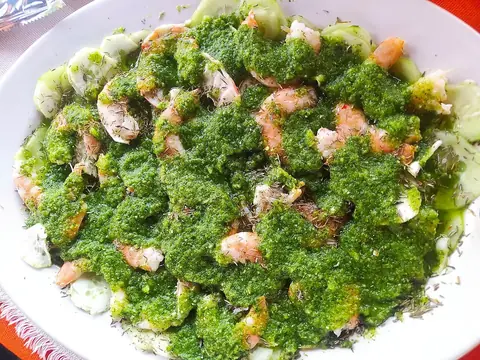
Aguachile is a Mexican seafood dish of raw, butterflied shrimp drenched in lime juice blended with fresh chillies, then served within minutes with sliced cucumber and red onion. It comes from Sinaloa on the Pacific coast and is eaten as a starter or a shared plate at mariscos restaurants, with tostadas or crackers on the side.
- At a glance
- Aguachile
- Raw shrimp in a sharp sauce of lime juice and blended fresh chilli, with cucumber and red onion.
- Pronunciation
- Say it like ah-gwah-CHEE-leh · IPA /aɣwaˈtʃile/
- Also written as
- aguachile de camarón, aguachile verde, aguachile rojo, aguachile negro, aguachile mixto, aguachile de callo, camarones en aguachile
What’s in it
Core ingredients
- raw shrimp, butterflied
- lime juice
- fresh green chillies (serrano or chiltepín)
- salt
- cucumber
- red onion
Often added
- coriander (cilantro) blended into the sauce
- avocado
- dried chile de árbol (red aguachile)
- soy sauce, Worcestershire sauce or Maggi seasoning (black aguachile)
- scallops (callo), octopus or fish (aguachile mixto)
- tomato-and-clam juice (Clamato) in some versions
- corn tostadas, often spread with mayonnaise
- saltine crackers
Allergens
| Allergen | How likely |
|---|---|
| Shellfish | Typically contains |
| Molluscs | Often contains |
| Fish | Sometimes contains |
| Gluten | Sometimes contains |
| Soy | Sometimes contains |
| Eggs | Sometimes contains |
| Dairy | Rarely contains |
| Peanuts | Rarely contains |
| Tree nuts | Rarely contains |
| Sesame | Rarely contains |
| Diet | Suitable? |
|---|---|
| Vegetarian | No |
| Vegan | No |
| Pescatarian | Usually |
| Halal | Depends — Shrimp is accepted by most Islamic schools but not all (some Hanafi scholars disagree), and some modern versions add tequila or mezcal to the sauce; ask what's in it. |
| Kosher | No |
| Gluten-free | Depends — Shrimp, lime and chilli contain no gluten and tostadas are corn, but black aguachile uses soy or Worcestershire sauce, which usually contain wheat or barley, and saltine crackers are wheat. |
Allergen and calorie details are AI estimates based on the menu and typical recipes. They can be incomplete — if you have a serious allergy, always check with the staff.
What's in an aguachile
The shrimp are peeled, split open and laid flat on a plate. Just before serving, the cook pours over a sauce of lime juice blended with fresh chillies and salt, and scatters sliced cucumber and red onion on top. The acid turns the outside of the shrimp opaque within minutes, but the inside stays close to raw, which gives aguachile its firm, juicy bite. The name means "chilli water": the earliest Sinaloan versions are said to have been little more than crushed chiltepín chillies in water.
There are three colours on most menus. Verde (green) blends serrano or chiltepín chillies with coriander. Rojo (red) uses dried chile de árbol. Negro (black) darkens the sauce with soy sauce, Worcestershire sauce or Maggi. Mixto versions add scallops, octopus or fish, and some cooks mix in tomato-and-clam juice.
Raw shrimp: what to know
Lime juice changes the texture and colour of the shrimp, but it doesn't cook it the way heat does, so aguachile is a raw seafood dish. People who avoid raw shellfish, including many pregnant people, usually skip it or choose a cooked dish such as a cóctel de camarón. It's at its best at busy seafood places where the shrimp is bought fresh each day.
How to order it
| Phrase | Meaning |
|---|---|
| Un aguachile verde, por favor. | A green aguachile, please. |
| ¿Pica mucho? | Is it very spicy? |
| ¿Lleva solo camarón, o también pulpo o callo? | Is it only shrimp, or is there octopus or scallop too? |
Not to be confused with
- Ceviche — Fish or seafood left to marinate longer in lime, usually with tomato, onion and coriander mixed in; aguachile is served almost at once in a thin chilli-lime sauce.
- Cóctel de camarón — Cooked shrimp in a cold, tomato-based sauce served in a glass, often with avocado; not raw and much milder.
- Camarones a la diabla — Cooked shrimp in a hot red chilli sauce, served as a main course with rice.
Frequently asked questions
Is the shrimp in aguachile raw?
Yes. The shrimp is raw and only briefly marinated: the lime juice is poured over a few minutes before it reaches the table, which firms up the surface but doesn't cook it through like heat. If you want cooked shrimp, order a cóctel de camarón or a hot dish such as camarones al mojo de ajo instead.
What's the difference between aguachile and ceviche?
Aguachile is served almost immediately in a thin, fiery sauce of lime and blended chilli, with the shrimp left in large butterflied pieces. Ceviche is usually chopped and left longer in the lime, so it's more evenly firm, and it's mixed with tomato, onion and coriander. Ceviche is often fish; aguachile is mostly shrimp.
Is aguachile very spicy?
Usually, yes. The chilli is blended into the lime sauce itself, so every bite carries heat, and the green version made with serrano or chiltepín can be very hot. Some restaurants will make a milder one if you ask "¿Me lo puede hacer menos picoso?" (Can you make it less spicy?) before it's prepared.
How do you pronounce aguachile?
Say ah-gwah-CHEE-leh, with the stress on the third syllable: in IPA, [aɣwaˈtʃile]. The g is soft, almost swallowed, and the final e sounds like the e in "bed". The word joins agua (water) and chile (chilli), which is a fair description of the sauce.